English
- English
- беларускі
- Hrvatski
- Тоҷикӣ
- O'zbek
- Español
- Português
- русский
- Français
- 日本語
- Deutsch
- tiếng Việt
- Italiano
- Nederlands
- ภาษาไทย
- Polski
- 한국어
- Svenska
- magyar
- Malay
- বাংলা ভাষার
- Dansk
- Suomi
- हिन्दी
- Pilipino
- Türkçe
- Gaeilge
- العربية
- Indonesia
- Norsk
- تمل
- český
- ελληνικά
- український
- Javanese
- فارسی
- தமிழ்
- नेपाली
- български
- ລາວ
- Latine
- Қазақша
- Euskal
- Azərbaycan
- Slovenský jazyk
- Lietuvos
- Eesti Keel
- Română
- Slovenski
- Srpski језик

Products


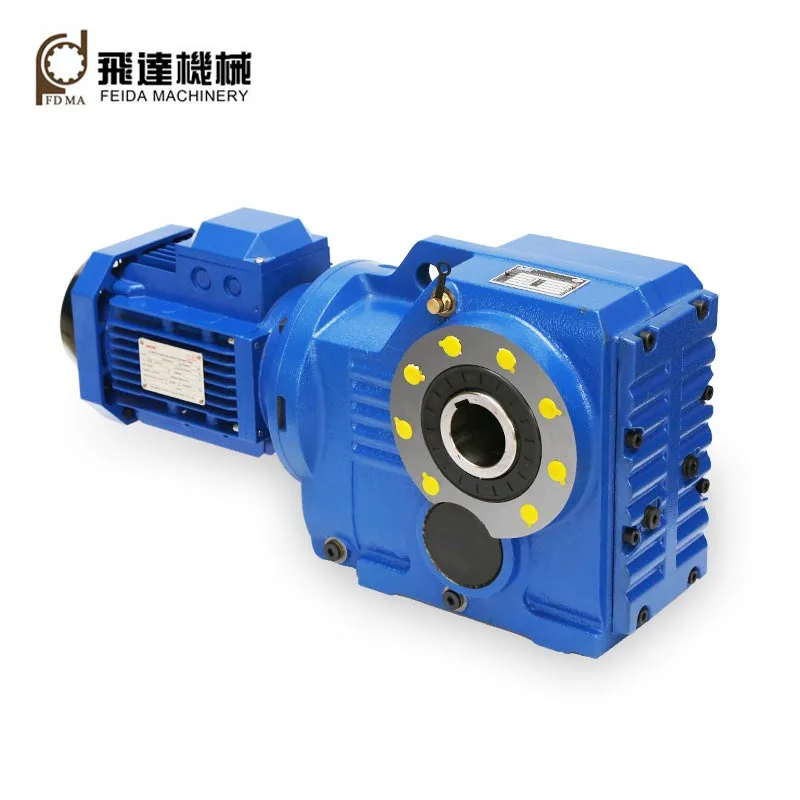
Bevel Gear Reducers
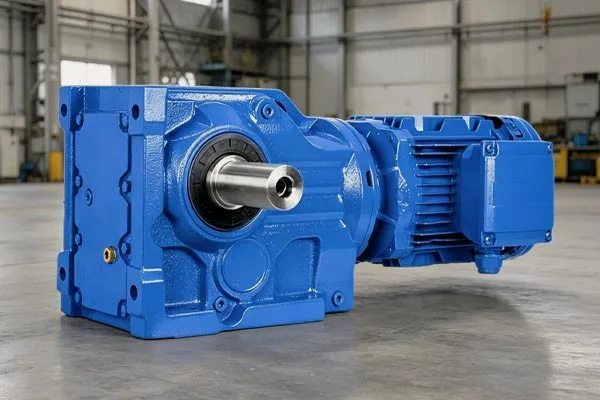
Feida Machinery manufactures and process all kinds of high quality bevel gear reducers since 1988.Welcome new and old customers to continue to cooperate with us to create a better future!
Feida bevel gear reducers are a type of speed reduction device that uses bevel gears as the main transmission components and achieves power transmission and speed reduction through gear meshing. They are suitable for intersecting shafts or specific crossed shaft transmission scenarios.
Basic working process : Power is input by an electric motor or other power source, transmitted through the input shaft to the driving bevel gear, and then transmitted to the output shaft through the meshing of the driving gear and the driven bevel gear. Due to the different number of teeth between the driving wheel and the driven wheel, the rotational speed of the output shaft decreases, while the output torque increases accordingly.
Main Structure
| Components | Brief description |
| Bevel Gear Pair | The core transmission component of a bevel gear reducer, usually consisting of a driving bevel gear and a driven bevel gear. |
| Housing | The main supporting structure of the reducer,accommodating and supporting the gears, shafts, bearings, and other components,while also storing lubricating oil, protecting internal transmission parts, and preventing external contaminants from entering the mechanism. |
| Input and Output Shafts | Two shafts arranged perpendicular to each other In common right-angle bevel gear reducers, allowing the reducer to meet equipment requirements for changing the direction of power transmission. |
| Bearings | The supporting components for the input and output shafts, ensuring stable rotation while carrying the radial forces, axial forces, and certain overturning moments generated during gear meshing. |
| Sealing Devices | Sealing components preventing lubricating oil leakage and keeping dust, moisture, and other contaminants from entering the housing, with common methods including oil seals, labyrinth seals, and mechanical seals. |
| Lubrication System | The lubrication system reducing friction, minimizing wear, and assisting with heat dissipation. |
Main Characteristics
Ability to Change the Direction of Power Transmission
One of the most distinctive features of bevel gear reducers is their ability to transfer power between intersecting shafts, making them particularly suitable for mechanical structures where the input shaft and the output shaft form a 90° angle. This feature makes it have high application value in devices with limited spatial layout.
Compact Structure and Flexible Layout
They are used to change the direction of power transmission and reduce speed within a relatively small space, facilitating compact equipment design.
Relatively High Transmission Efficiency
With reasonable design, high processing accuracy and good lubrication, bevel gear transmission can maintain high mechanical efficiency and is suitable for equipment with certain requirements for energy loss.
Strong Load-Carrying Capacity
Spiral bevel gear reducers, in particular, provide smooth meshing and a relatively high contact ratio, which allow them to withstand substantial transmission loads and operate under continuous industrial conditions.
High Requirements for Manufacturing and Installation Precision
They require more precise manufacturing, assembly, and adjustment than conventional straight cylindrical gear transmissions because the tooth geometry of bevel gears is relatively complex.
Significant Axial Forces
Bevel gear meshing generates not only radial forces but also axial forces, especially in spiral bevel gear transmission. Therefore, bearing type, bearing arrangement, and shaft-system stiffness must be carefully considered during design.


Manufacturing Process
Feida has more than 30 years of experience in the transmission parts industry, producing bevel gear reducers in accordance with ISO 9001:2015 quality management system .
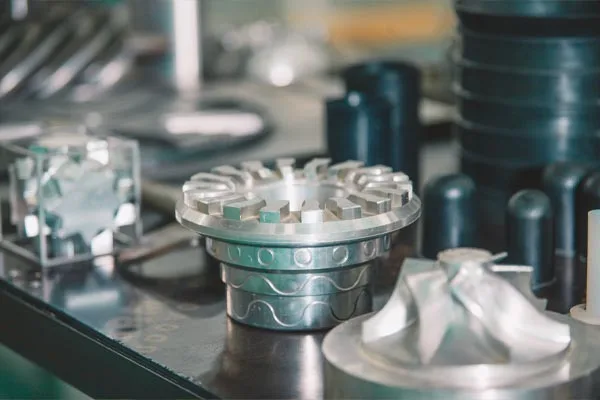
Our manufacturing process is a systematic project that covers everything from component processing to the assembly, commissioning and inspection of the entire machine.
Process Summary by Component
| Component | Typical Production Process | Key Control Items |
| Bevel Gears | Blank forging → Turning → Gear milling → Carburizing and quenching → Gear grinding → Inspection | Tooth profile, tooth alignment, tooth thickness, hardness, hardened-layer depth, and contact pattern |
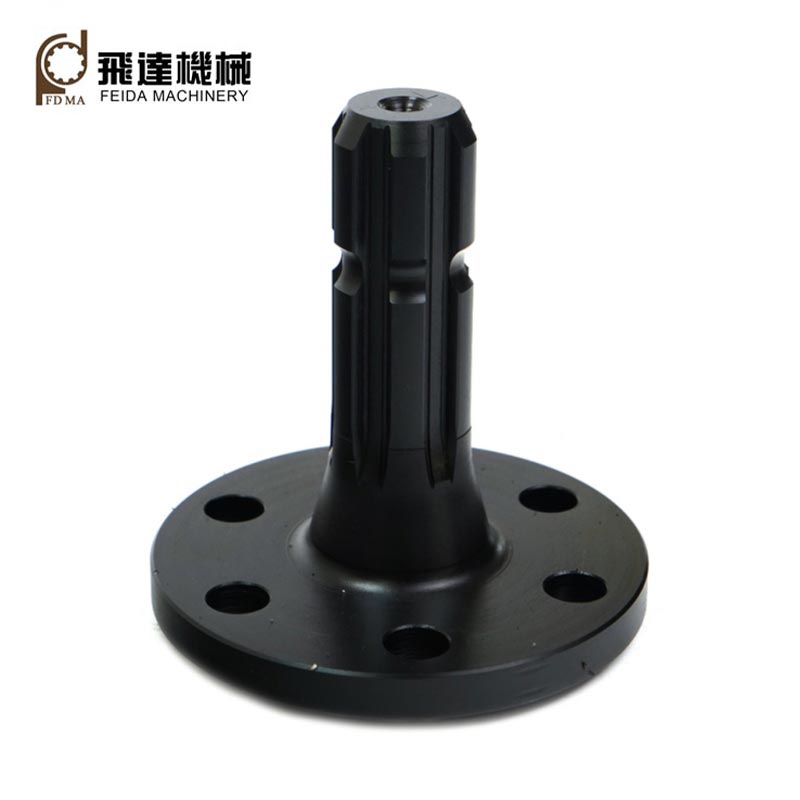
| Input Shaft / Output Shaft | Forging → Turning →Gear hobbing → Heat treatment → Grinding → Inspection | Shaft diameter, concentricity, runout, surface roughness, and mechanical properties |
| Reducer Housing | Casting or welding → Stress relief → Milling → Boring → Drilling → Cleaning → Inspection | Housing dimensions, bearing bore coaxiality, mounting-surface flatness, and sealing performance |
| End Covers and Auxiliary Components | Cutting or casting → Turning/milling → Drilling → Deburring → Inspection | Dimensional accuracy, fitting accuracy, sealing grooves, and surface quality |
| Complete Assembly | Component cleaning → Bearing and shaft assembly → Gear pair installation and adjustment → Housing assembly → Lubrication → No-load test → Load test | Backlash, tooth contact, bearing preload, sealing, noise, vibration, temperature rise, and transmission efficiency |
Application
Conveying Machinery
Used in belt conveyors, chain conveyors, roller conveyors, and other conveying systems to provide stable, low-speed, high-torque power.
Mixing and Agitation Equipment
Used in mixing and agitation equipment in industries such as chemical processing, building materials, and food production to achieve the required speed and direction of rotation.
Automated Production Lines
Used in packaging machinery, assembly equipment, sorting systems, and robotic auxiliary mechanisms, where compact layouts and reliable power transmission are required.
Engineering and Specialized Machinery
Used in certain types of construction machinery, agricultural machinery, lifting equipment, and other specialized machines to transmit power and change the direction of rotation.
FAQ
What if I don't know which gear reducer I need?
You can refer to our catalogue to choose the gearbox, or we can help you choose the right products when you provide the technical information such as required output torque, output speed, motor parameters etc. Don't worry.Send as much information as you can, and our team will help you find the right one you are looking for.
What information should we give before placing a purchase order?
1.Type of the gearbox, size, gear ratio, input and output types, input flange, mounting position, motor specifications, shaft deflection,etc. 2.Housing color.3.Purchase quantity 4.Other special requirements.
What are common types?
Common types include straight bevel gear reducers,spiral bevel gear reducers,bevel gear–cylindrical gear reducers,and right-angle bevel gear reducers.
What are common materials?
The actual material selection should be determined based on the tooth surface contact fatigue strength, tooth root bending fatigue strength, and heat treatment requirements.Common materials include 20CrMnTi, 40Cr, and 45 steel for gears; 45 steel and 40Cr for shafts; HT200 and HT250 for housings; and GCr15 for bearings.
How to maintain and care for a gear reducer?
Key maintenance points include:
· Regularly inspecting the lubricating oil
· Monitoring the operating temperature
· Checking for abnormal noise and vibration
· Inspecting seals and fasteners
· Avoiding overload operation
· Performing periodic inspections and overhauls
Related Category
Send Inquiry
Contact Info
-
Address
No.1117 Dongsheng Road, Zhendong Industrial Zone, Dongshi, Jinjiang, Fujian, P. R. China.
-
Tel
-
Email
Please submit your email to receive our price list for gears, precision parts and sheet metal parts. You can expect our reply within one business day.

News Recommendations