English
- English
- беларускі
- Hrvatski
- Тоҷикӣ
- O'zbek
- Español
- Português
- русский
- Français
- 日本語
- Deutsch
- tiếng Việt
- Italiano
- Nederlands
- ภาษาไทย
- Polski
- 한국어
- Svenska
- magyar
- Malay
- বাংলা ভাষার
- Dansk
- Suomi
- हिन्दी
- Pilipino
- Türkçe
- Gaeilge
- العربية
- Indonesia
- Norsk
- تمل
- český
- ελληνικά
- український
- Javanese
- فارسی
- தமிழ்
- नेपाली
- български
- ລາວ
- Latine
- Қазақша
- Euskal
- Azərbaycan
- Slovenský jazyk
- Lietuvos
- Eesti Keel
- Română
- Slovenski
- Srpski језик

Products
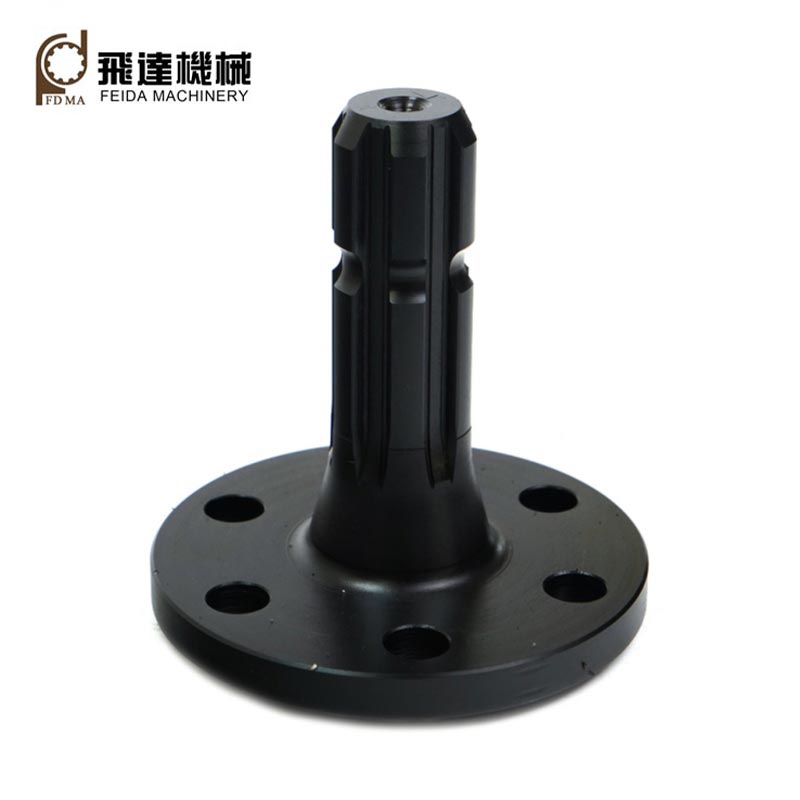
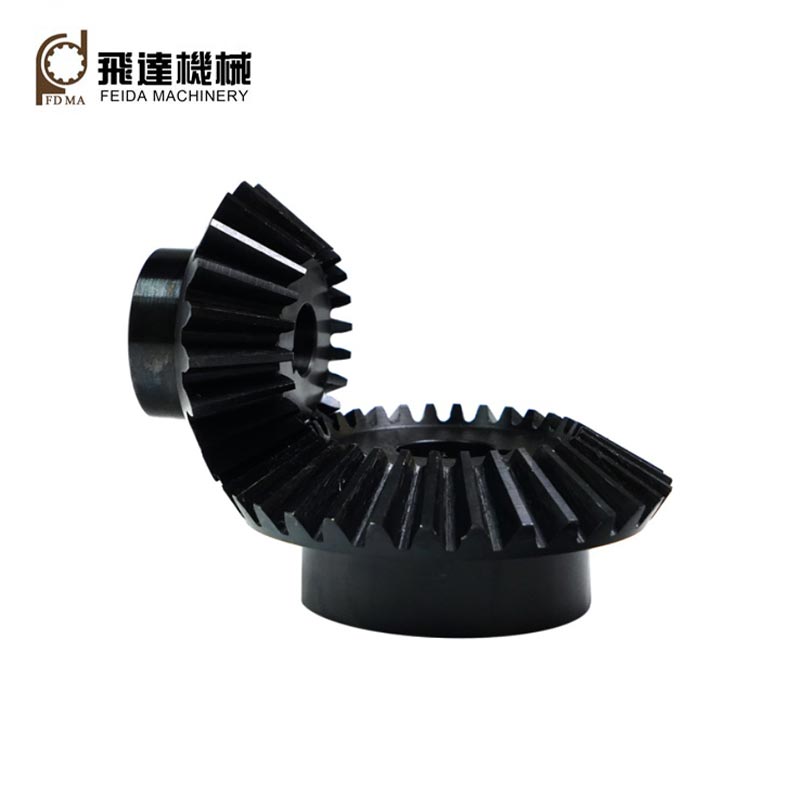
Gear Shafts
Founded in 1988, Jinjiang Feida Machinery Co., Ltd. Covers an area of 45, 000 square meters and has over 30 years of expertise in the R&D and manufacturing of gear shafts, which feature compact structure,high transmission reliability,high rigidity, and high manufacturing requirements. The primary function of the product is to transmit power and mechanical motion.
Main Structure
Gear Section:The core part of a gear shaft;meshes with other gears to transmit power and motion.
Journal:The section of the shaft that usually fits with a bearing and supports the rotation of the
gear shaft;typically have relatively high requirements for dimensional accuracy, roundness, surface roughness, and
wear resistance.
Shaft Shoulder:Used to provide axial positioning for bearings, gears, and other components. It can
also help transmit certain axial loads.
Shaft Body:The main section connecting the gear section, journals, and other structural
features.Its primary functions are to transmit torque and withstand bending loads generated during operation.
Shaft End:Used to connect the gear shaft to couplings, other gears, sprockets, or other
transmission components.Depending on the application, the shaft end may be designed as a cylindrical, tapered,
threaded, or splined shaft end.
Key Parameters
A gear shaft generally refers to a shaft with gear teeth machined directly onto the shaft body.Its key parameters include:
● Module (m) : Determines the size of the gear teeth.
● Number of Teeth (z) : Determines the gear ratio and basic gear dimensions.
● Pitch Diameter (d) : An important reference dimension for gear design.
● Face Width (b) : Affects the load-carrying capacity of the gear.
● Shaft Diameter (dₛ) : Determines the strength and load-bearing capacity of the shaft.
● Rotational Speed (n) : Affects transmission performance and dynamic loads.
● Transmitted Power (P) and Torque (T) : Key load parameters used to determine the strength and dimensions of the gear shaft.
● Material and Heat Treatment : Affect the strength, wear resistance, fatigue resistance, and service life of the gear shaft.
Manufacturing Process & Quality Control
Our typical production process can be summarized as follows:
Blank preparation → Forging → Turning → Gear hobbing → Heat treatment → Gear grinding → Grinding → Inspection →
Packaging
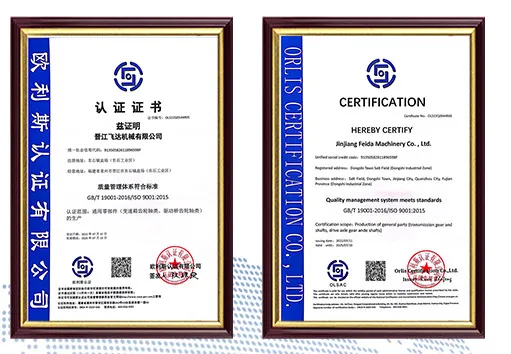
Feida conducts production activities in compliance with ISO 9001:2015. Quality control is implemented throughout the entire production process, covering IQC, IPQC, FQC and OQC, to ensure product quality.Test include dimensions, hardness, tooth profile, tooth alignment, and surface quality.
Applications
Automotive Industry
Used inside transmissions to transfer power and provide different gear ratios.
Gear Reducers
Used to transmit power and achieve speed reduction and torque multiplication through different gear combinations.
Construction Machinery
Used in the transmission systems of excavators, loaders, forklifts, and mining equipment to transmit high torque.
Machine Tools
Used in lathes, milling machines, grinding machines, and other machine tools to help transmit power and adjust rotational speed.
Industrial Robots and Automation Equipment
Used in robot joints and precision reduction mechanisms.
Agricultural Machinery
Used in tractors, harvesters, seeders, and other agricultural equipment.
Frequently Asked Questions
Do you offer customization services?
Yes. Please provide us with 2D/3D drawings, samples, or technical specifications so that we can customize the product for you.
What materials are commonly used for gear shafts?
Common materials include:
● 20CrMnTi
● 20CrMo
● 20CrNiMo
● 40Cr
● 42CrMo
● 45 steel
Can you provide samples?
Yes.We can make pre-production samples. After the sample is approved, mass production can begin, helping reduce quality risks during large-scale manufacturing.
- View as
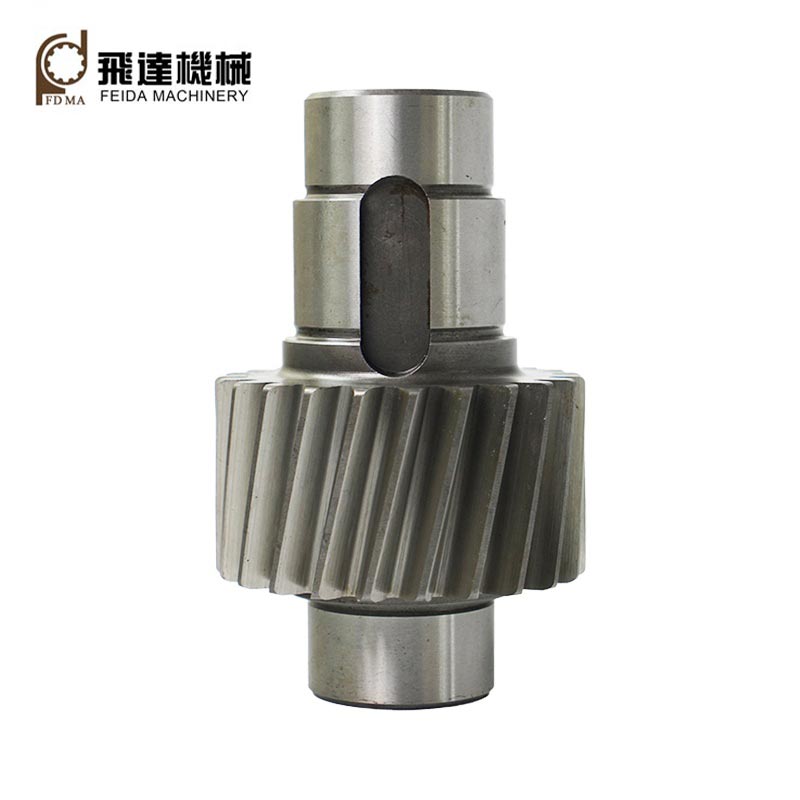
Helical Gear Shafts
Jinjiang Feida Machinery Co., Ltd. has been engaged in transmission parts manufacturing since 1988.The transmission parts include helical gear shafts,gears,spline shafts,etc.OEM & ODM services are acceptable.Welcome to contact us. Hope to build business relationship with you!

Spur Gear Shafts
High quality and good price spur gear shafts are offered by Feida Machinery factory.We have more than 30 years’ experience in the industry
,high quality raw materials, high production standards, and a highly specialized team.Hope to build business relationship with you!
As a reliable Gear Shafts manufacturer and supplier in China, we have custom options and volume discount pricing. Please just send us a quotation!