English
- English
- беларускі
- Hrvatski
- Тоҷикӣ
- O'zbek
- Español
- Português
- русский
- Français
- 日本語
- Deutsch
- tiếng Việt
- Italiano
- Nederlands
- ภาษาไทย
- Polski
- 한국어
- Svenska
- magyar
- Malay
- বাংলা ভাষার
- Dansk
- Suomi
- हिन्दी
- Pilipino
- Türkçe
- Gaeilge
- العربية
- Indonesia
- Norsk
- تمل
- český
- ελληνικά
- український
- Javanese
- فارسی
- தமிழ்
- नेपाली
- български
- ລາວ
- Latine
- Қазақша
- Euskal
- Azərbaycan
- Slovenský jazyk
- Lietuvos
- Eesti Keel
- Română
- Slovenski
- Srpski језик

Products
Wholesale High-Performance Gears for Reliable Industrial Power Transmission
Feida Machinery has more than 30 years of experience in producing transmission gears, which are mechanical components with teeth around their circumference. Gear transmission usually transmits motion and power through the meshing of two or more gears. The core feature of this type of transmission is that it uses meshing teeth to transmit motion and power while enabling changes in rotational speed, torque, and direction of rotation.
Main Product Types and Characteristics
Feida gears can be classified into several types according to their structures and applications.
Spur Gears: Teeth are parallel to the gear axis. They are simple in structure, easy to manufacture, highly efficient, and relatively inexpensive. They are commonly used in ordinary machinery and low-speed transmission systems.
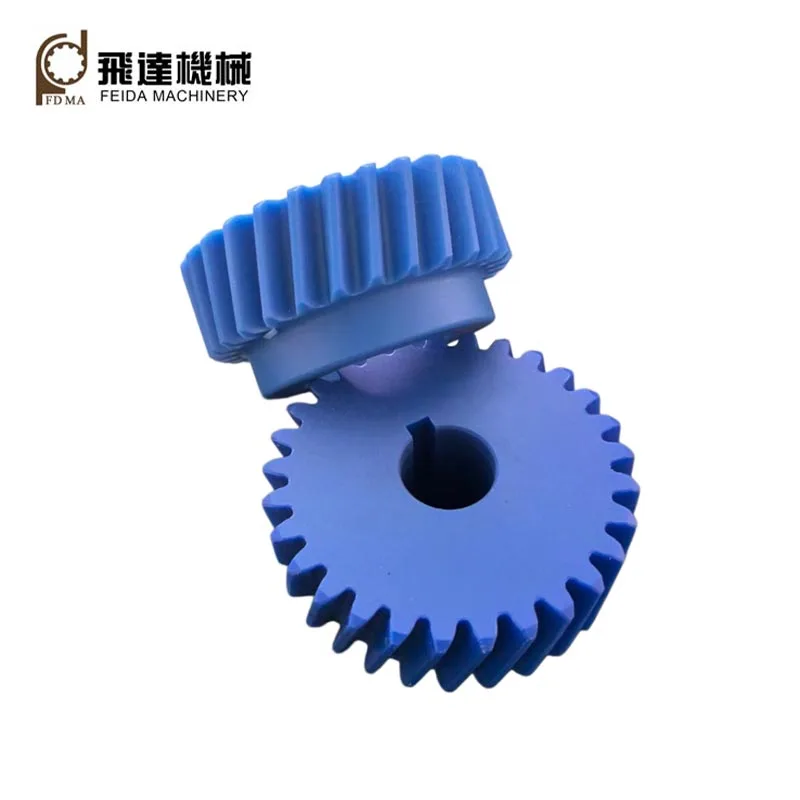
Helical Gears: The teeth are inclined relative to the gear axis. Compared with spur gears, they generally provide smoother engagement and greater load-carrying capacity.
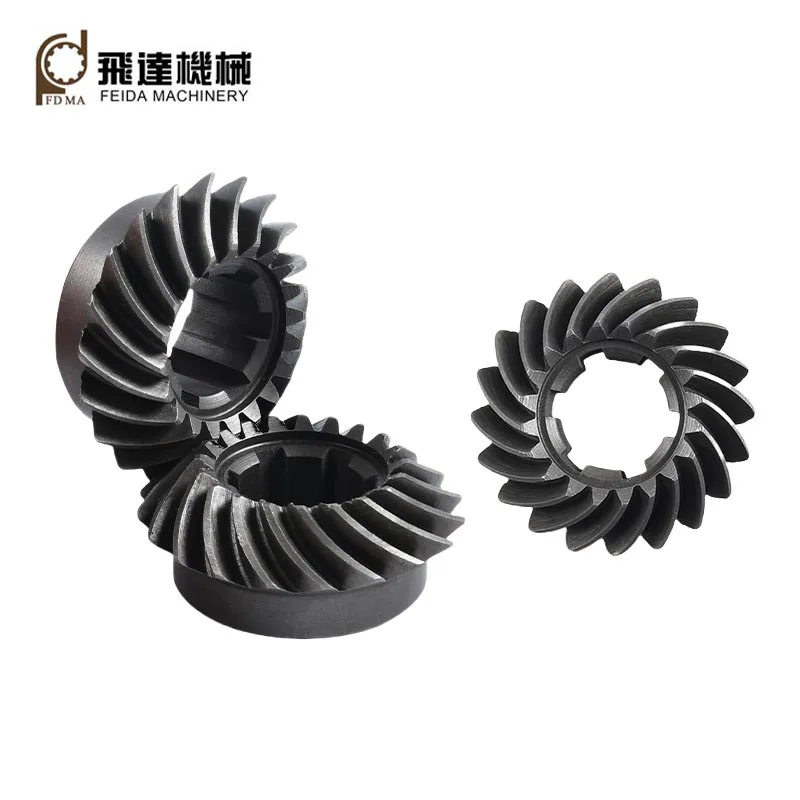
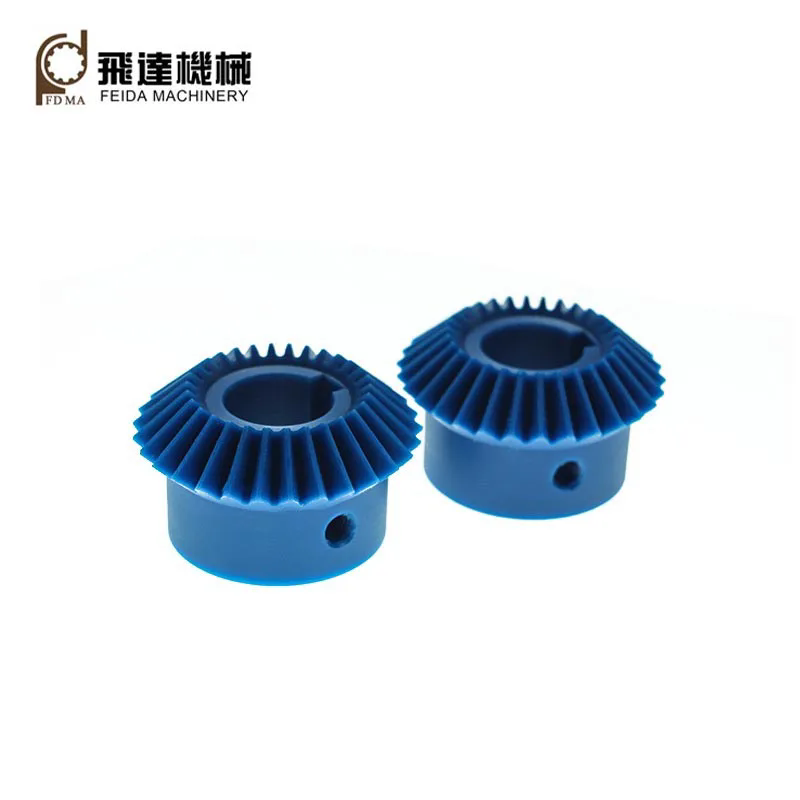
Bevel Gears: Teeth are arranged on a conical surface. They are mainly used to transmit motion between intersecting shafts and are commonly found in mechanical systems that need to change the direction of power transmission.
Worm Gears: A worm gear system consists of a worm and a worm wheel. It is suitable for transmitting motion between non-parallel, non-intersecting shafts and is often used when a large reduction ratio is required. They feature large reduction ratios, a compact structure, and, in some designs, a certain degree of self-locking capability.
Rack and Pinion: A rack is a straight component with teeth arranged in a line. When it meshes with a gear, it can convert rotary motion into linear motion, or linear motion into rotary motion.
Production Capacity
At present, Feida has more than 200 pieces of equipment and a professional production team of 150 people, including more than 20 technicians. It has passed the ISO9001 quality management system certification to maintain international quality management standards and provide more reliable guarantees for continuously and stably providing satisfactory products to customers. Our gear manufacturing usually involves material selection, forging or cutting, turning, tooth machining, heat treatment, grinding, and inspection.
Quality Control
From raw material selection to the final product, Feida Machinery follows a strict and comprehensive quality control system in accordance with the ISO 9001:2015 standard.
Material Selection: Only certified and traceable steel, aluminum alloy, brass, and engineering plastic are used, ensuring strength and durability.
Process Control: Each stage of machining, hobbing, grinding, and finishing is monitored under strict standards
Inspection and Testing: With various test instruments, every gear undergoes 100% dimensional inspection before leaving our facility.
Certification: Our processes comply with recognized international standards, ensuring global acceptance
Each piece is individually checked before dispatch, guaranteeing that clients receive only the highest quality products.
After-sales Service
To ensure high-quality after-sales service, Feida's professional engineering team provides online video conferencing support, offering guidance, answering questions, and striving to resolve all customer issues.
Application Areas
Automobiles and Transportation
Gear transmission is also widely used in automobile, motorcycles, bicycles, ships and railway equipment.
Industrial Machinery and Equipment
Used in gearboxes, machine tools, conveyor systems, cranes, mixers, and other equipment to transmit power and control rotational speed.
Robots and Automation Equipment
Used in robot joints, robotic arms, and servo systems to help control movement precisely and increase output torque.
Everyday Household Products
Found in electric screwdrivers, printers, juicers, toy cars, lifting devices, and other products.
Clocks and precision instruments
Suitable for mechanical watches, mechanical clocks, measuring instruments, precision equipment, and mechanical transmission systems in cameras.
- View as

Metal Helical Gears
The distinct advantages of metal helical gears from Feida Machinery factory are high load capacity,smooth operation,and low noise.For customization,pls send drawings or samples to us!

Metal Spur Gears
Metal spur gears are well known for their high transmission efficiency ,whose precision grade is up to ISO/DIN 5-10 level.Feida Machinery factory has a highly skilled team and advanced cnc machines to provide the one-stop service from design to delivery.OEM and ODM services are available.Welcome to contact us!

Metal Worm Gears
Feida Machinery factory adheres to the "quality first, service first, continuous improvement and innovation to meet customers" for the business purpose.Our metal worm gears are satisfied by our new and old customers.Weclome to contact us!
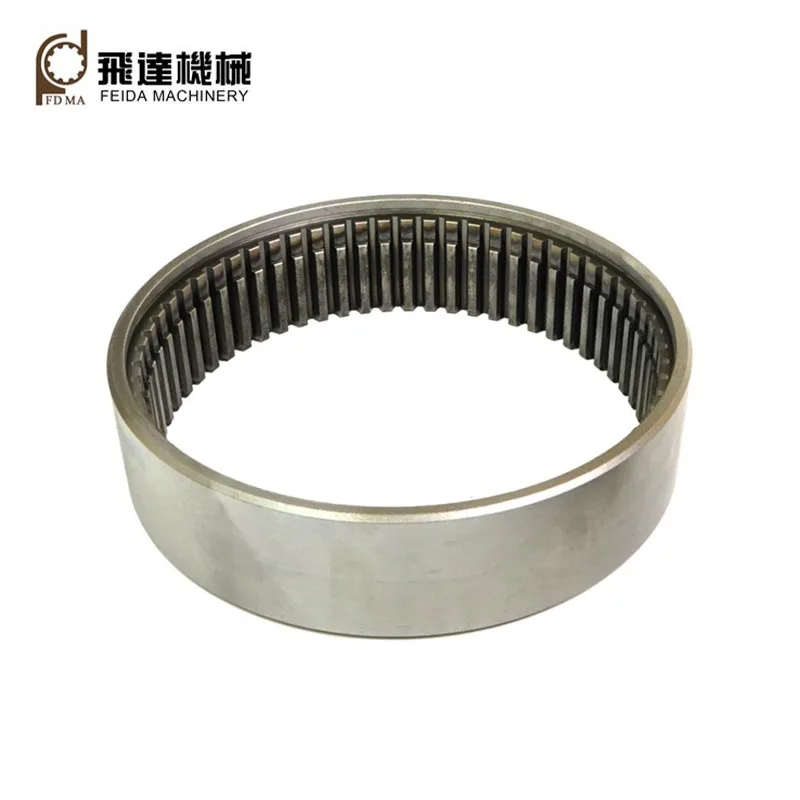
Metal Internal Gears
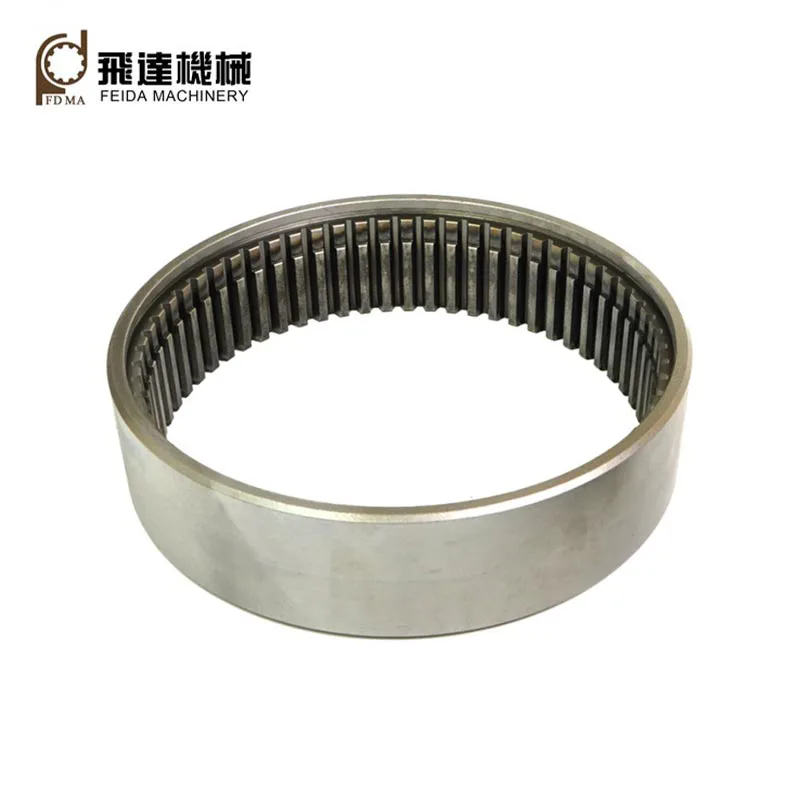
High quality metal internal gears from Feida Machinery factory are offered to clients at home and abroad.We have ISO9001:2015 quality management system certification and professional personnel who inspect 100% of the products to ensure high quality.Welcome to contact us!

Metal Gear Racks
With more than 30 years experience,Feida Machinery factory produces high quality metal gear racks in its own factory.These products’ precision grade is up to ISO/DIN 8-10 level.We look forward to cooperating with you, if you want to know more, you can consult us now, we will reply to you in time!

Metal Straight Bevel Gears
With more than 30 years production experience,Feida Machinery produces high quality metal straight bevel gears in its own factory.Our clients are from home and abroad,some of whom also include global 500 enterprises.
We look forward to cooperating with you!
We look forward to cooperating with you!
As a reliable Gears manufacturer and supplier in China, we have custom options and volume discount pricing. Please just send us a quotation!