English
- English
- беларускі
- Hrvatski
- Тоҷикӣ
- O'zbek
- Español
- Português
- русский
- Français
- 日本語
- Deutsch
- tiếng Việt
- Italiano
- Nederlands
- ภาษาไทย
- Polski
- 한국어
- Svenska
- magyar
- Malay
- বাংলা ভাষার
- Dansk
- Suomi
- हिन्दी
- Pilipino
- Türkçe
- Gaeilge
- العربية
- Indonesia
- Norsk
- تمل
- český
- ελληνικά
- український
- Javanese
- فارسی
- தமிழ்
- नेपाली
- български
- ລາວ
- Latine
- Қазақша
- Euskal
- Azərbaycan
- Slovenský jazyk
- Lietuvos
- Eesti Keel
- Română
- Slovenski
- Srpski језик

Products
High-Performance Gear Reducers for Heavy Machinery
Equipped with advanced production facilities and manufacturing processes, Fedia possesses comprehensive testing capabilities and strong technical expertise. Our gear reducers are widely recognized and trusted by customers and exported to over 20 countries. We welcome your consultation and look forward to establishing a long-term and stable cooperative relationship with you.
Feida gear reducers are precision mechanical transmission devices usually installed between a power source (e.g., an electric motor, an internal combustion engine, or a hydraulic motor) and a working machine, converting high-speed, low-torque input into low-speed, high-torque output. They transmit power through the meshing of gears with different numbers of teeth. When a small gear drives a larger gear, the output speed decreases, while the output torgue increases.
Main Components
Housing: Supports and protects the internal gears, shafts, and bearings; contains the lubricating oil and helps dissipate heat. Common materials include cast iron, cast steel, and aluminum alloys.
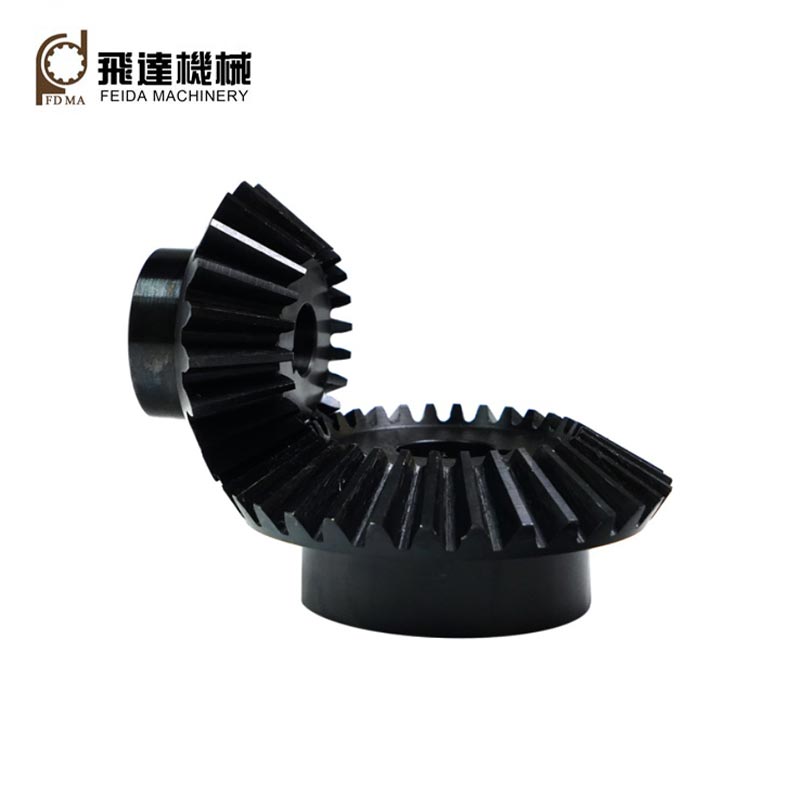
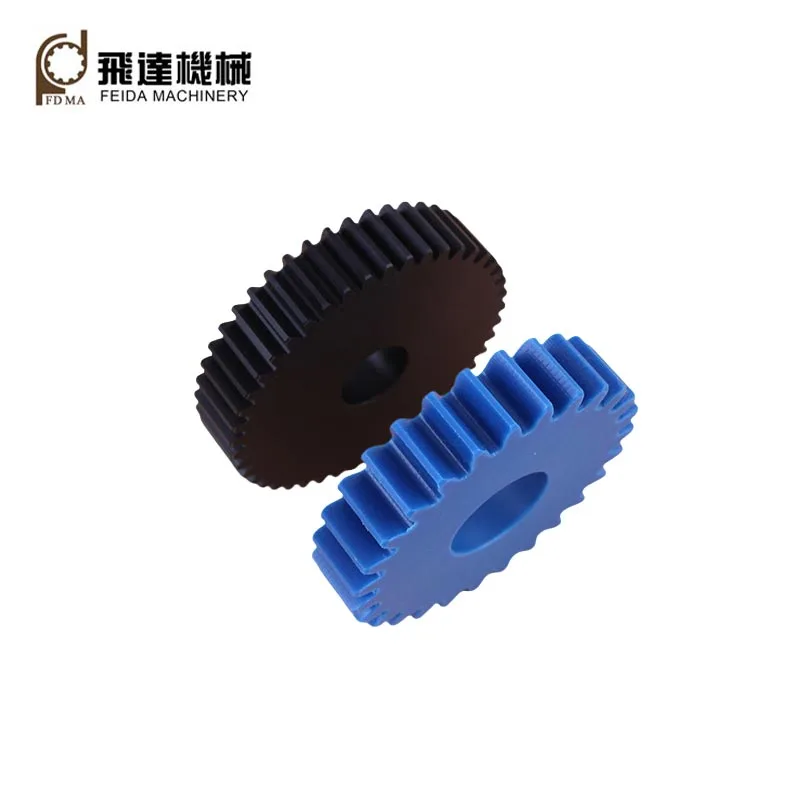
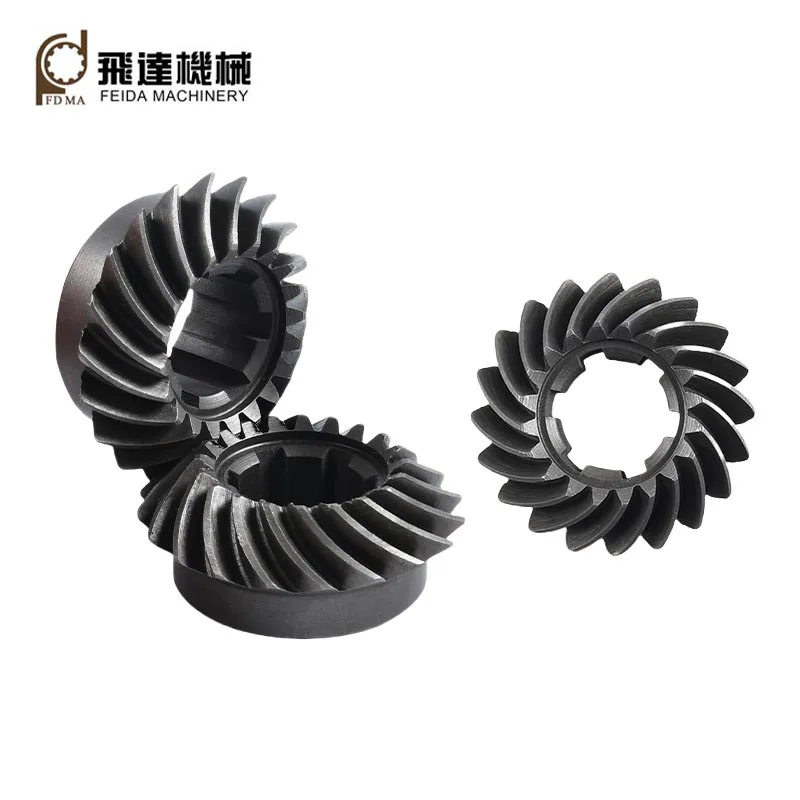
Gears: Serve as the core transmission components of a reducer; transmit power and achieve speed reduction. Depending on the design and application, gear types may include spur gears, helical gears, herringbone gears, bevel gears, and worm gears.
Shafts: Support the gears and transmit torque. Common types include input shafts, intermediate shafts, and output shafts. The strength, stiffness, and alignment accuracy of the shafts directly affect the reducer's operating performance.
Bearings: Support rotating shafts, reduce friction, and withstand radial or axial loads.
Seals: Prevent lubricant leakage and keep dust, water, and other contaminants from entering the housing.
Lubrication Oil: Reduces friction and wear between gears and bearings while helping dissipate heat.
Common Accessories: Include breathers, oil-level indicators, drain plugs, sight glasses, and temperature monitoring devices.
Main Types
Our gear reducers can be classified into several types according to their gear structures, transmission methods, and applications. These types include spur, helical, bevel, worm, and planetary gear reducers.
Overall Production Process & Quality Control
Feida Machinery implement strict standard production and full-process quality control in its 45,000 m² facility in Jinjiang, China.
The manufacturing steps:
Raw Material Procurement and Inspection
↓
Blank Manufacturing
↓
Machining of Gears, Shafts, Housing, and Other Components
↓
Gear Heat Treatment and Precision Finishing
↓
Component Inspection and Cleaning
↓
Assembly
↓
Performance Testing, Painting, and Packaging
↓
Final Delivery
For full-process quality control, It includes four stages: Incoming material inspection, in-process monitoring, finished product testing, and pre-shipment inspection.
Customzation Options
Gear ratio, output torque, speed, mounting configuration, shaft diameter and extension, gear and housing materials, sealing and lubrication, and appearance can be customized.
Application Areas
Conveying Equipment
Used to adjust the operating speed and output torque of belts, chain, and roller conveyors.
Lifting Machinery
Used in lifting, traveling, and slewing mechanisms to meet heavy-load and low-speed operating requirements.
Industrial Robots
Used in robotic joints to achieve high positioning accuracy, load capacity, and motion-control performance.
Wind Power Generation
Used to convert the low-speed rotation of wind turbine rotors into the higher rotational speed required by generators.
Mixing and Agitation Equipment
Used to provide low-speed, high-torque power to mixing shafts. Widely used in the chemical, food-processing, and building-materials industries.
Automated Production Lines
Used to provide stable and controllable power output for packaging, assembly, sorting, and processing equipment.
- View as

Planetary Gear Reducers
Due to our reliable product quality, diverse product range, competitive pricing, and prompt after-sales service,Feida Machinery has established long-term cooperation relationship with both domestic and international clients.OEM &ODM service are available,Welcome to customize planetary gear reducers !
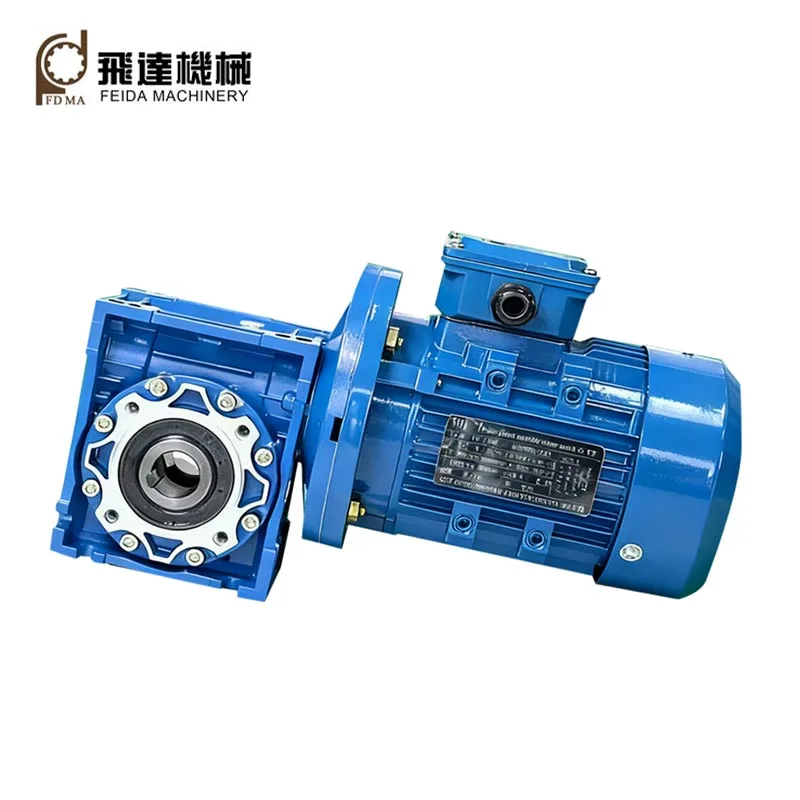
Worm Gear Reducers
Feida Machinery produces high quality worm gear reducers using advanced cnc machining technology and premium raw materials.We look forward to cooperating with you!

Bevel Gear Reducers
Feida Machinery manufactures and process all kinds of high quality bevel gear reducers since 1988.Welcome new and old customers to continue to cooperate with us to create a better future!
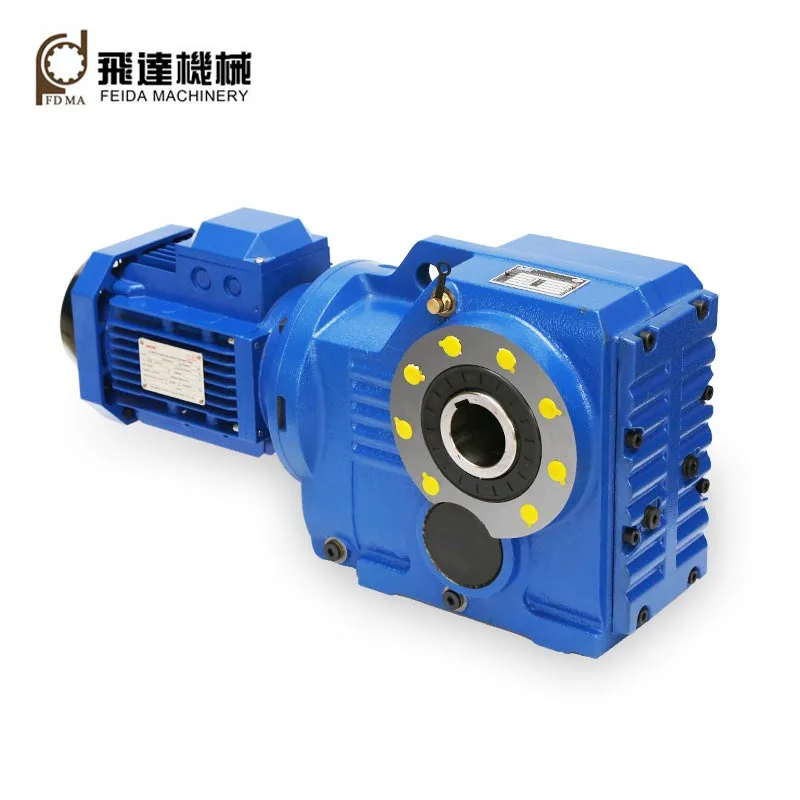
Helical gear reducers
Since it was founded in 1988,Feida Machinery has been specialized in manufacturing a wide range of high-quality helical gear reducers,OEM &ODM service is acceptable,Welcome to contact us!
As a reliable Gear Reducers manufacturer and supplier in China, we have custom options and volume discount pricing. Please just send us a quotation!