English
- English
- беларускі
- Hrvatski
- Тоҷикӣ
- O'zbek
- Español
- Português
- русский
- Français
- 日本語
- Deutsch
- tiếng Việt
- Italiano
- Nederlands
- ภาษาไทย
- Polski
- 한국어
- Svenska
- magyar
- Malay
- বাংলা ভাষার
- Dansk
- Suomi
- हिन्दी
- Pilipino
- Türkçe
- Gaeilge
- العربية
- Indonesia
- Norsk
- تمل
- český
- ελληνικά
- український
- Javanese
- فارسی
- தமிழ்
- नेपाली
- български
- ລາວ
- Latine
- Қазақша
- Euskal
- Azərbaycan
- Slovenský jazyk
- Lietuvos
- Eesti Keel
- Română
- Slovenski
- Srpski језик

Products
High-Efficiency Worm Gears for Smooth Industrial Power Transmission
Established in 1998, Jinjiang Feida Machinery Co., Ltd. has a modern production workshop covering 45,000 square meters and employs 150 people, including over 20 technical staff. Our worm gears are widely sold in China, Europe, the United States, the Middle East, Southeast Asia, and other regions.
The gear usually works with a worm in a worm gear transmission system and features high reduction ratios, compact design, smooth operation, and potential for self-locking.
Working Principle
The worm is usually installed on the driving shaft and is powered by an electric motor or another power source. The worm wheel is installed on the driven shaft. When the worm rotates, its helical teeth continuously engage with the teeth of the worm wheel and cause the wheel to rotate.
Main Parameter
Module: Determines the basic tooth size and is one of the most important parameters.
Number of Teeth: Determines the transmission ratio together with the number of worm starts.
Pressure Angle: Affects tooth loading, meshing performance, and transmission characteristics.
Face Width: Affects its load-carrying capacity.
Number of Worm Starts: Determines the transmission ratio together with the worm wheel tooth count.
Production Flow & Quality Control
Feida's modern production steps include:
Raw Material Selection → Forging → Turning → Gear Hobbing → Heat Treatment → Inspection → Packaging
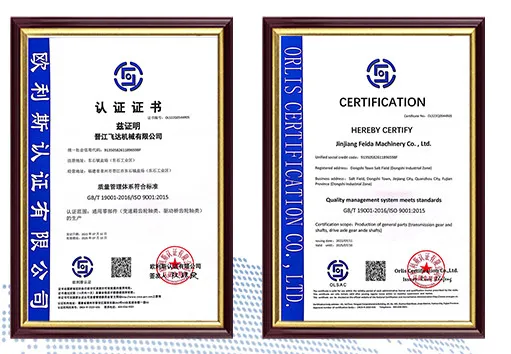
Feida has obtained ISO 9001:2015 quality management system certification. Rigorous quality control is taken out on every step right from selection of raw material to final packing.
Applications
● Lifting equipment: Electric hoists, winches, and lifting mechanisms
● Elevators and lifting mechanisms: Used in some older or specific drive systems
● Packaging machinery: Transmission mechanisms that require low speed and high torque
● Conveying equipment: Belt conveyors and screw conveyors
● Machine tools: Rotary tables, dividing heads, and adjustment mechanisms
● Valves: Drive mechanisms for large butterfly valves and gate valves
● Robotics and automation equipment: Rotary positioning and actuator mechanisms
● Automobiles and construction machinery: Certain steering, adjustment, and auxiliary transmission systems
Frequently Asked Questions
Are worm gears always self-locking?
No. Self-locking depends on factors such as the worm lead angle, friction conditions, materials, lubrication, and load.
Why are worm wheels commonly made from bronze alloys?
Worm wheels are often manufactured from bronze or other copper alloys because these materials provide suitable wear resistance and friction characteristics when paired with hardened steel worms. The specific material combination should be selected according to the load, speed, service life, and lubrication conditions.
- View as

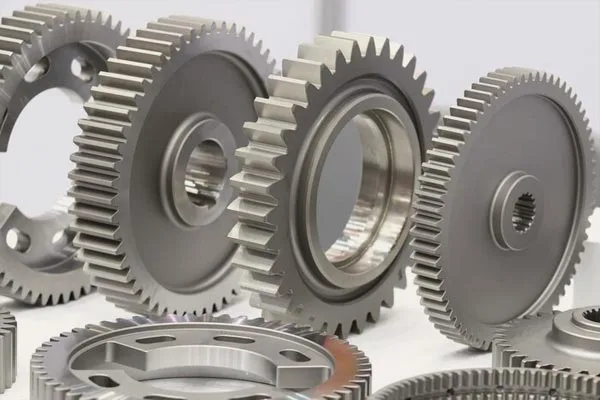
Metal Worm Gears
Feida Machinery factory adheres to the "quality first, service first, continuous improvement and innovation to meet customers" for the business purpose.Our metal worm gears are satisfied by our new and old customers.Weclome to contact us!

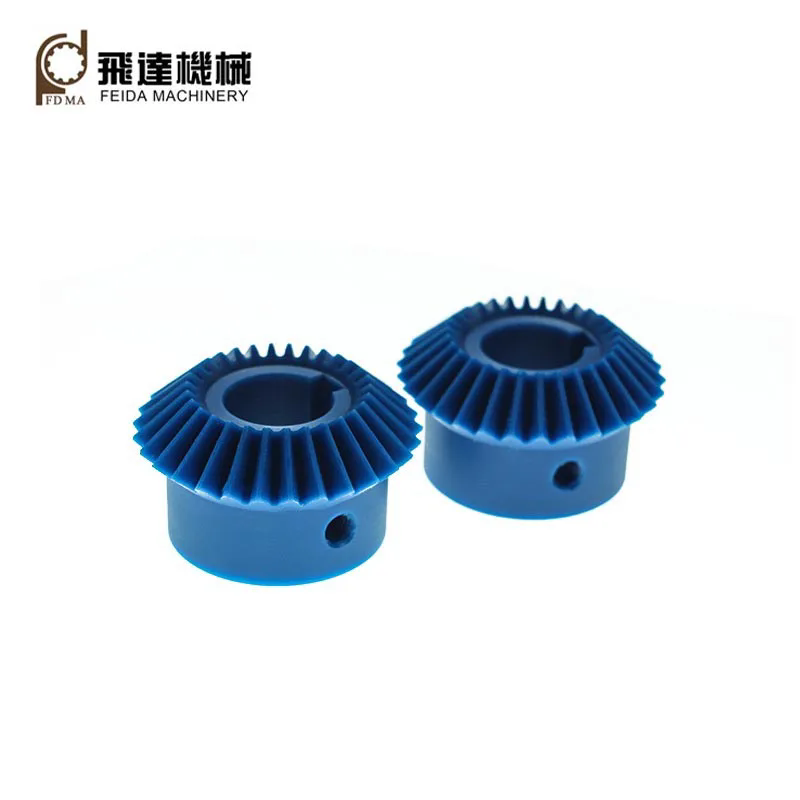
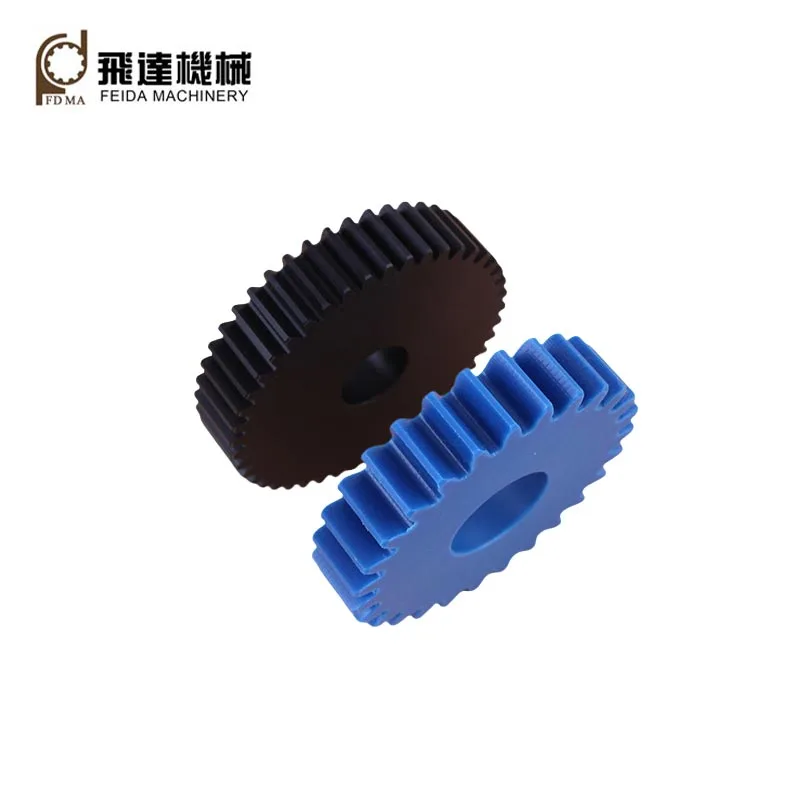
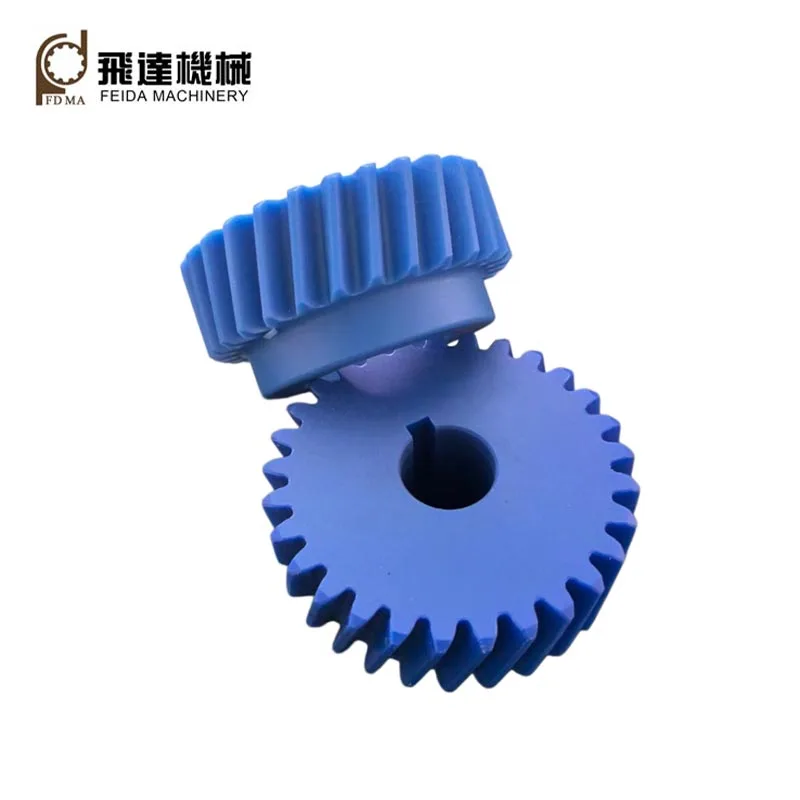
Plastic Worm Gears
Feida Machinery has strict process inspection and final production inspection,ensuring the high quality for plastic worm gears .We look forward to cooperating with you!
As a reliable Worm Gears manufacturer and supplier in China, we have custom options and volume discount pricing. Please just send us a quotation!