English
- English
- беларускі
- Hrvatski
- Тоҷикӣ
- O'zbek
- Español
- Português
- русский
- Français
- 日本語
- Deutsch
- tiếng Việt
- Italiano
- Nederlands
- ภาษาไทย
- Polski
- 한국어
- Svenska
- magyar
- Malay
- বাংলা ভাষার
- Dansk
- Suomi
- हिन्दी
- Pilipino
- Türkçe
- Gaeilge
- العربية
- Indonesia
- Norsk
- تمل
- český
- ελληνικά
- український
- Javanese
- فارسی
- தமிழ்
- नेपाली
- български
- ລາວ
- Latine
- Қазақша
- Euskal
- Azərbaycan
- Slovenský jazyk
- Lietuvos
- Eesti Keel
- Română
- Slovenski
- Srpski језик

News
What Makes Metal Straight Bevel Gears Reliable for Industrial Power Transmission?
Metal Straight Bevel Gears are compact mechanical components designed to transmit rotary motion and torque between intersecting shafts, commonly where a change in transmission direction is required. Their straight tooth geometry gives them a relatively simple construction and makes them suitable for many industrial mechanisms where dependable power transfer, compact installation, controllable manufacturing cost, and straightforward maintenance are important.
For buyers, however, selecting a suitable gear involves much more than choosing a diameter or tooth count. Material grade, hardness, gear ratio, pressure angle, shaft arrangement, tooth accuracy, face width, operating speed, lubrication, mounting accuracy, and expected load all influence actual performance. This guide explains the key considerations in practical terms and shows how a properly specified gear can help reduce premature wear, excessive noise, dimensional mismatch, and unexpected maintenance costs.

Table of Contents
- What Metal Straight Bevel Gears Are
- Key Structural Features
- Material and Heat Treatment Considerations
- How Design Influences Performance
- Industrial Applications
- What Buyers Should Check Before Ordering
- Manufacturing and Quality Control
- Common Problems and Their Causes
- Straight Bevel Gears and Spiral Bevel Gears
- Customized Metal Straight Bevel Gears
- Frequently Asked Questions
- Conclusion
1. What Metal Straight Bevel Gears Are
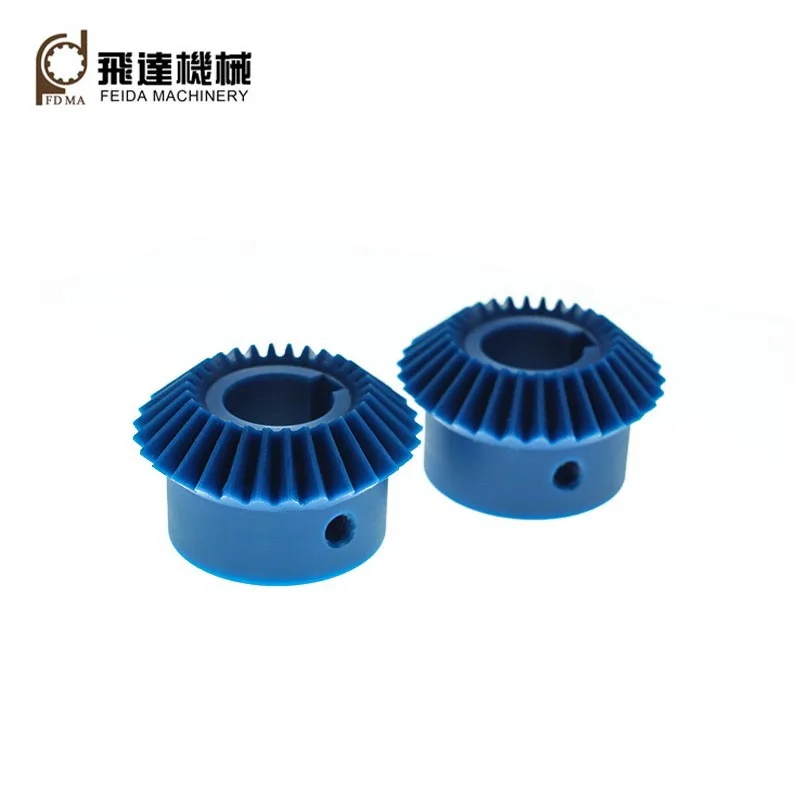
Metal Straight Bevel Gears are conical gears with straight teeth arranged along the surface of a pitch cone. When a pair of bevel gears meshes, they can transfer motion between intersecting shafts while changing the direction of power transmission.
Compared with cylindrical spur gears, the geometry of a bevel gear is more three-dimensional because its tooth dimensions change across the face width. The tooth form, pitch cone, shaft angle, face width, backlash, and mounting position must therefore be considered as a complete system rather than as isolated dimensions.
Straight bevel gears are particularly attractive when the application does not require the smooth high-speed engagement associated with more complex curved-tooth designs. Their comparatively straightforward tooth arrangement can also be advantageous for certain low-to-moderate speed mechanical systems, compact equipment, machinery drives, and replacement applications.
Key point: A straight bevel gear should be specified according to the complete transmission system—not simply by outside diameter or tooth count.
2. Key Structural Features
A reliable gear starts with a clear understanding of its geometry. Several parameters directly affect compatibility, load capacity, and installation.
| Parameter | Why It Matters | Buyer Concern |
|---|---|---|
| Tooth Count | Influences transmission ratio and geometry. | Must match the mating gear. |
| Pitch Diameter | Determines fundamental gear dimensions. | Important for installation space. |
| Face Width | Affects tooth contact and load distribution. | Must suit the intended load. |
| Shaft Angle | Defines the relative orientation of shafts. | Critical for mating compatibility. |
| Backlash | Provides necessary operating clearance. | Excessive or insufficient backlash can create problems. |
3. Material and Heat Treatment Considerations
Material selection is one of the most important decisions when purchasing metal gears. A gear used in a lightly loaded packaging mechanism has very different requirements from a gear operating continuously under high torque.
Common engineering choices include carbon steels, alloy steels, stainless steels, and other specialized metal grades. The appropriate material depends on load, operating environment, corrosion exposure, speed, expected service life, manufacturing method, and available heat treatment.
- Carbon steel: Often considered for cost-sensitive mechanical applications where moderate performance requirements apply.
- Alloy steel: Suitable when higher strength, wear resistance, or heat-treatment capability is required.
- Stainless steel: Useful where corrosion resistance is an important consideration.
- Heat-treated steel: Can provide a harder working surface while maintaining suitable core properties when properly specified.
Heat treatment should never be selected independently from the gear design. Hardness, case depth where applicable, core properties, dimensional stability, and subsequent finishing requirements all need to be considered together.
4. How Design Influences Performance
Gear performance is determined by the interaction between geometry, material, manufacturing accuracy, installation, lubrication, and operating conditions. A theoretically suitable gear can still perform poorly if the mating components are incorrectly aligned.
Load
Torque and transmitted power determine the required tooth strength and overall gear dimensions.
Speed
Higher operating speed can increase sensitivity to tooth accuracy, vibration, lubrication, and balancing.
Alignment
Incorrect shaft or housing alignment can create uneven contact and accelerate tooth wear.
Lubrication
Correct lubricant selection and maintenance help reduce friction, heat, and surface damage.
5. Industrial Applications
Metal Straight Bevel Gears can be found in mechanical systems that need angular power transmission without requiring a highly complex gear configuration.
- Industrial machinery and transmission assemblies
- Material handling equipment
- Packaging machinery
- Conveying systems
- Agricultural machinery
- Machine tools and auxiliary mechanisms
- Automotive and vehicle-related mechanical systems
- General-purpose power transmission equipment
- Custom mechanical assemblies
The suitability of straight bevel gears depends on the actual operating conditions. Applications with demanding high-speed, low-noise requirements may require a different bevel gear configuration, while simpler systems may benefit from the straightforward geometry of straight teeth.
6. What Buyers Should Check Before Ordering
Many purchasing problems happen because the buyer provides only a product name and basic diameter. For a replacement or custom gear, the manufacturer needs enough information to reproduce the intended transmission relationship.
- Number of teeth on the pinion and gear
- Required gear ratio
- Pitch or module information
- Pressure angle and relevant geometry
- Shaft angle
- Outside diameter and face width
- Bore diameter and keyway requirements
- Required material
- Heat-treatment requirements
- Operating speed and torque
- Installation dimensions
- Required quantity and production schedule
- Inspection and dimensional requirements
If the original gear is available, providing a drawing, sample, photographs with measurements, or a complete gear specification can significantly reduce communication errors. For replacement projects, information about the mating gear is equally important because two gears must be compatible as a pair.
7. Manufacturing and Quality Control
Manufacturing quality directly affects tooth contact, dimensional consistency, running behavior, and service life. Straight bevel gears have conical geometry, so controlling the tooth form and related dimensions requires suitable equipment, tooling, measurement methods, and process control.
A dependable production process normally includes material verification, blank preparation, tooth cutting, heat treatment where required, finishing, dimensional inspection, and final quality verification. Depending on the application, inspection may cover tooth dimensions, runout, backlash, bore dimensions, hardness, surface condition, and mating performance.
For custom industrial orders, buyers should also ask how production samples are approved and how dimensional consistency is maintained during batch production. A supplier capable of communicating clearly about drawings, tolerances, materials, and inspection requirements can help prevent costly rework.
8. Common Problems and Their Causes
| Observed Problem | Possible Cause | Recommended Check |
|---|---|---|
| Abnormal noise | Poor alignment, unsuitable contact, excessive clearance, or operating conditions. | Check mounting, backlash, lubrication, and tooth contact. |
| Rapid tooth wear | High load, inadequate lubrication, contamination, or unsuitable hardness. | Review load, lubricant, material, and surface condition. |
| Uneven contact | Shaft misalignment or dimensional mismatch. | Inspect mounting position and mating gear dimensions. |
| Premature failure | Overload, shock loading, incorrect material, or insufficient design margin. | Recalculate operating conditions and review gear specifications. |
9. Straight Bevel Gears and Spiral Bevel Gears
Straight and spiral bevel gears both transmit power between intersecting shafts, but their tooth geometry differs. Straight bevel gears use straight tapered teeth, while spiral bevel gears use curved teeth.
| Feature | Straight Bevel Gear | Spiral Bevel Gear |
|---|---|---|
| Tooth form | Straight | Curved |
| Manufacturing complexity | Generally simpler | Generally more complex |
| Typical strength of application | Many low-to-moderate speed systems | Often selected for demanding smooth-running applications |
| Operating characteristics | Simple and direct tooth engagement | More gradual tooth engagement |
The appropriate configuration depends on speed, load, noise requirements, installation space, manufacturing capability, and total system requirements. A gear should therefore be selected according to the machine rather than by comparing tooth styles in isolation.
10. Customized Metal Straight Bevel Gears
Standard gears are convenient when the existing dimensions match the machine. However, many industrial projects require customized gears because the available installation space, shaft arrangement, load, mounting interface, or replacement dimensions are not standard.
Jinjiang Feida Machinery Co., Ltd. can be considered for projects that require customized metal gear components based on engineering drawings, samples, dimensional requirements, or application information. For B2B buyers, the most useful starting point is a complete technical specification rather than simply requesting a price for “straight bevel gears.”
A Practical Customization Brief
When contacting a manufacturer, prepare:
- Gear drawings or CAD files
- Tooth count and gear ratio
- Module or pitch information
- Shaft angle and mounting dimensions
- Material and hardness requirements
- Operating torque and speed
- Required quantity
- Application environment
- Inspection and tolerance requirements
- Target delivery schedule
This information allows the manufacturer to assess whether the proposed design, material, machining route, and quality requirements are compatible with the intended application.
11. Frequently Asked Questions
Are Metal Straight Bevel Gears suitable for industrial machinery?
Yes. They can be used in many industrial transmission systems where intersecting shafts and angular power transmission are required. Suitability depends on the actual torque, speed, duty cycle, alignment, noise requirements, and environmental conditions.
What material is commonly used for metal bevel gears?
Carbon steels and alloy steels are common choices, while stainless steel and other specialized materials may be selected for particular environments. The appropriate grade should be determined according to load, wear, corrosion, heat treatment, and manufacturing requirements.
Can straight bevel gears be customized?
Yes. Customization may include tooth count, module, dimensions, bore, keyway, shaft angle, material, hardness, tolerances, and other interface requirements. Engineering drawings or samples can make the customization process more precise.
How can gear noise be reduced?
Noise can be affected by tooth accuracy, backlash, alignment, surface condition, lubrication, rotational speed, and mounting rigidity. The complete transmission assembly should be checked instead of assuming that the gear alone is responsible.
What information should I provide when requesting a quotation?
Provide drawings or samples when possible, together with tooth count, module or pitch, dimensions, material, hardness, shaft angle, bore details, operating conditions, quantity, and inspection requirements. More complete technical information generally makes quotation and production communication more efficient.
How long can a metal bevel gear operate?
Service life varies significantly according to load, speed, material, heat treatment, lubrication, alignment, contamination, duty cycle, and manufacturing accuracy. There is no universal service-life figure that applies to every gear application.
12. Conclusion
Metal Straight Bevel Gears remain a practical solution for mechanical systems that need reliable angular power transmission through intersecting shafts. Their relatively straightforward tooth geometry makes them useful across a wide range of machinery, particularly when the application places greater emphasis on dependable transmission, compact installation, controlled manufacturing requirements, and maintainability than on extremely quiet high-speed operation.
For buyers, the most important step is to match the gear specification with the real operating environment. Tooth count, geometry, material, hardness, face width, shaft angle, speed, torque, alignment, lubrication, and manufacturing tolerances should all be considered before production begins.
Whether you need replacement components, production batches, or custom-designed transmission parts, clear technical communication can help reduce compatibility issues and unnecessary development costs. Jinjiang Feida Machinery Co., Ltd. can work with customers on customized gear requirements based on project specifications and application needs.
Need Custom Metal Straight Bevel Gears?
Share your drawing, sample, dimensions, material requirements, or application details with Jinjiang Feida Machinery Co., Ltd. Our team can help evaluate the specifications and discuss a suitable customized gear solution for your machinery. Contact Us.
Previous :
-
Related News
- How Do Spiral Bevel Gears Improve Power Transmission in Demanding Machinery?
- What Makes Sprocket Gears Essential for Reliable Power Transmission?
- How Do Internal Gears Improve Precision and Power Transmission?
- What costly downstream failures stem from overlooked spline‑shaft manufacturing process gaps?
- Why Are Plastic Helical Gears Becoming a Reliable Choice for Modern Mechanical Systems?
- Can in‑house spline production solve machinery OEMs’ costly field‑failure headaches?
Leave me a message