English
- English
- беларускі
- Hrvatski
- Тоҷикӣ
- O'zbek
- Español
- Português
- русский
- Français
- 日本語
- Deutsch
- tiếng Việt
- Italiano
- Nederlands
- ภาษาไทย
- Polski
- 한국어
- Svenska
- magyar
- Malay
- বাংলা ভাষার
- Dansk
- Suomi
- हिन्दी
- Pilipino
- Türkçe
- Gaeilge
- العربية
- Indonesia
- Norsk
- تمل
- český
- ελληνικά
- український
- Javanese
- فارسی
- தமிழ்
- नेपाली
- български
- ລາວ
- Latine
- Қазақша
- Euskal
- Azərbaycan
- Slovenský jazyk
- Lietuvos
- Eesti Keel
- Română
- Slovenski
- Srpski језик

News
Why Are Plastic Helical Gears Becoming a Reliable Choice for Modern Mechanical Systems?
Plastic helical gears are increasingly used in modern machinery because they offer a combination of lightweight design, smooth operation, corrosion resistance, and cost efficiency. Compared with traditional metal gears, plastic helical gears provide unique advantages for applications requiring quiet performance, reduced maintenance, and flexible manufacturing. This article explains how plastic helical gears work, their key benefits, common challenges, selection considerations, and how manufacturers such as Jinjiang Feida Machinery Co., Ltd. help customers achieve reliable transmission solutions.
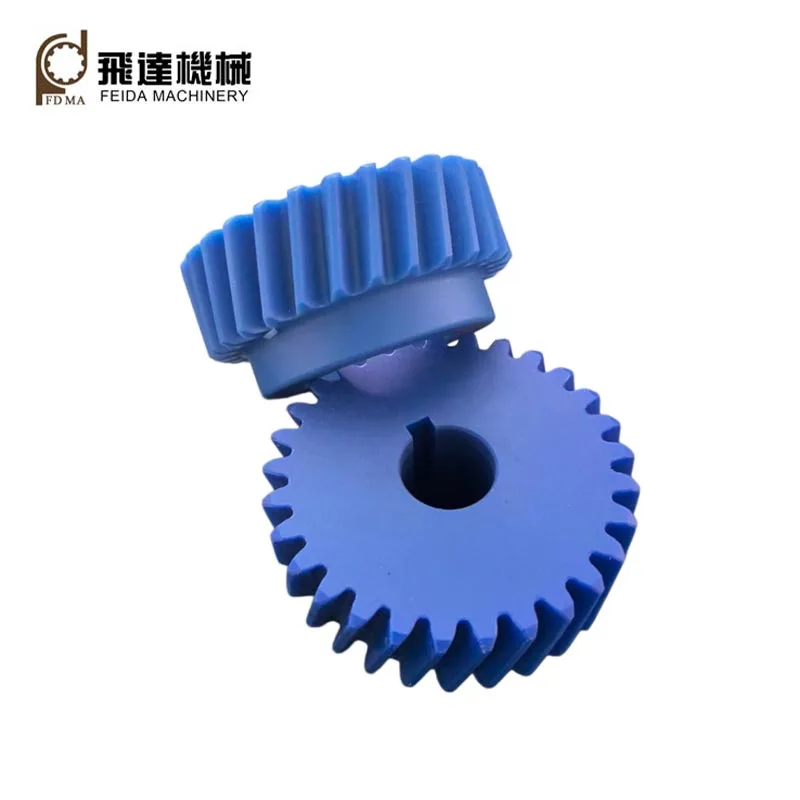
Table of Contents
- 1. What Are Plastic Helical Gears?
- 2. Why Are Plastic Helical Gears Important in Modern Machinery?
- 3. What Advantages Do Plastic Helical Gears Provide?
- 4. Where Are Plastic Helical Gears Commonly Used?
- 5. How to Select the Right Plastic Helical Gears?
- 6. How Are High-Quality Plastic Helical Gears Manufactured?
- 7. Plastic Helical Gears vs Metal Gears
- 8. Common Problems and Solutions for Plastic Helical Gears
- 9. Frequently Asked Questions About Plastic Helical Gears
- 10. Conclusion
What Are Plastic Helical Gears?
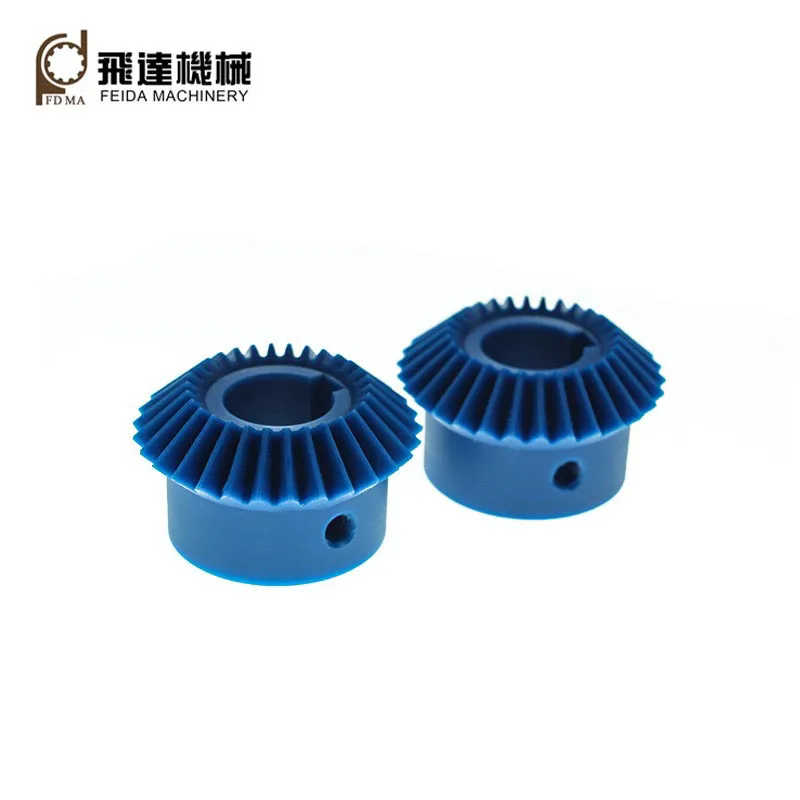
Plastic helical gears are transmission components made from engineering plastics with angled teeth arranged in a helical pattern. Unlike straight spur gears, the angled tooth design allows gradual engagement between gear teeth, resulting in smoother power transmission and reduced operating noise.
These gears are commonly manufactured using high-performance materials such as nylon, POM (polyoxymethylene), reinforced plastics, and other specialized polymers. The material selection depends on operating conditions including load capacity, temperature requirements, speed, lubrication conditions, and environmental exposure.
The unique structure of plastic helical gears makes them suitable for applications where traditional metal gears may create excessive noise, require frequent maintenance, or increase overall equipment weight.
For manufacturers and engineers looking for efficient motion-control solutions, plastic helical gears provide a practical balance between performance, durability, and manufacturing flexibility.
Why Are Plastic Helical Gears Important in Modern Machinery?
Modern industries increasingly demand mechanical components that deliver high efficiency while reducing energy consumption, noise levels, and maintenance costs. Plastic helical gears meet these requirements by offering several functional improvements.
In automated equipment, medical devices, office machines, robotics, and precision instruments, smooth operation is often more important than extremely high load capacity. Plastic helical gears can minimize vibration and provide stable movement, improving the overall user experience of the final product.
Another important factor is design flexibility. Plastic materials can be molded into complex shapes, allowing engineers to develop compact gear systems that save installation space and reduce production costs.
Key Reasons Industries Choose Plastic Helical Gears
- Lower operating noise compared with many metal gear systems
- Reduced component weight for lightweight equipment design
- Excellent corrosion resistance in challenging environments
- Lower production costs for large-volume applications
- Flexible customization options for different machinery requirements
What Advantages Do Plastic Helical Gears Provide?
Choosing the correct gear material directly affects equipment performance, reliability, and maintenance requirements. Plastic helical gears provide several advantages that make them attractive for modern engineering applications.
| Advantage | Description | Customer Benefit |
|---|---|---|
| Low Noise Operation | The helical tooth structure creates gradual contact between teeth and reduces impact during rotation. | Creates quieter machines suitable for indoor and precision applications. |
| Lightweight Design | Plastic materials have lower density than traditional metals. | Helps reduce equipment weight and transportation costs. |
| Corrosion Resistance | Engineering plastics resist moisture, chemicals, and many environmental factors. | Provides longer service life in demanding conditions. |
| Cost Efficiency | Plastic gears can be produced efficiently through advanced molding processes. | Reduces manufacturing expenses for mass production. |
| Self-Lubricating Options | Certain plastic materials can operate with reduced lubrication requirements. | Lowers maintenance frequency and operating costs. |
One of the biggest advantages of plastic helical gears is their ability to deliver smooth transmission without creating excessive mechanical noise. This makes them particularly valuable in products where user comfort and quiet operation are essential.
Where Are Plastic Helical Gears Commonly Used?
Plastic helical gears are widely adopted across multiple industries because of their adaptability and performance advantages. Their applications continue expanding as manufacturers seek lightweight and efficient alternatives to conventional components.
- Automotive Components: Plastic helical gears are used in vehicle adjustment systems, small motors, and interior mechanisms where quiet operation is required.
- Medical Equipment: Precision instruments benefit from smooth movement, low vibration, and corrosion resistance.
- Office Automation Equipment: Printers, scanners, and copiers often require compact transmission systems with reliable performance.
- Robotics and Automation: Robotic devices require accurate movement control and lightweight components.
- Household Appliances: Plastic helical gears are found in various appliances where noise reduction and cost control are important.
- Industrial Machinery: Small and medium transmission systems can benefit from customized plastic gear solutions.
As machinery becomes more compact and intelligent, the demand for precision plastic transmission components continues to grow. Professional suppliers focus on material technology, processing accuracy, and quality control to meet increasingly complex customer requirements.
How to Select the Right Plastic Helical Gears?
Selecting suitable plastic helical gears requires careful evaluation of operating conditions. Choosing the wrong material or design may lead to premature wear, deformation, or reduced transmission efficiency.
| Selection Factor | Important Considerations |
|---|---|
| Material Type | Consider strength, temperature resistance, wear resistance, and chemical compatibility. |
| Load Requirements | Evaluate torque, speed, and continuous operating conditions. |
| Gear Size | Select appropriate module, diameter, tooth number, and structure design. |
| Operating Environment | Check exposure to moisture, chemicals, dust, and temperature changes. |
| Manufacturing Accuracy | Ensure proper tooth profile accuracy and dimensional consistency. |
Working with an experienced manufacturer can significantly reduce selection risks. Jinjiang Feida Machinery Co., Ltd. provides professional gear solutions based on customer application requirements, helping businesses choose suitable materials, structures, and production methods.
How Are High-Quality Plastic Helical Gears Manufactured?
The manufacturing process directly influences the performance, durability, and accuracy of plastic helical gears. A professional production process combines advanced equipment, strict quality control, and suitable material selection to ensure consistent gear performance.
The first step is material preparation. Engineering plastics must be carefully selected according to the application environment. Different materials provide different levels of strength, heat resistance, wear resistance, and dimensional stability.
After material selection, manufacturers use precision molding or machining processes to produce gear components. Injection molding is widely used for high-volume production because it provides excellent efficiency and consistent quality. For customized or low-volume orders, precision machining can achieve complex designs and tighter tolerances.
During production, important parameters such as tooth profile accuracy, surface finish, dimensional tolerance, and mechanical strength must be carefully controlled. Any small deviation in gear manufacturing may affect noise levels, transmission efficiency, and service life.
Key Manufacturing Steps of Plastic Helical Gears
- Material Selection: Choose suitable engineering plastics based on operating requirements.
- Mold Design: Develop accurate molds according to gear specifications and customer drawings.
- Precision Forming: Produce gears through injection molding or machining processes.
- Quality Inspection: Check dimensions, tooth accuracy, strength, and surface conditions.
- Performance Testing: Verify gear performance under simulated working environments.
Jinjiang Feida Machinery Co., Ltd. focuses on providing reliable mechanical transmission components by combining manufacturing expertise with customer-oriented engineering support. This approach helps customers receive plastic helical gears that match their equipment requirements.
Plastic Helical Gears vs Metal Gears
When selecting transmission components, many engineers compare plastic helical gears with traditional metal gears. Each option has its own advantages depending on the working environment and performance requirements.
| Comparison Factor | Plastic Helical Gears | Metal Gears |
|---|---|---|
| Weight | Lightweight and suitable for compact equipment. | Heavier due to metal density. |
| Noise Level | Generally operates more quietly because plastic absorbs vibration. | May produce higher noise during high-speed operation. |
| Corrosion Resistance | Excellent resistance to moisture and many chemicals. | May require surface treatment to prevent corrosion. |
| Production Cost | Cost-effective for mass production. | Usually higher manufacturing costs. |
| Load Capacity | Suitable for light and medium load applications. | Preferred for extremely high-load applications. |
| Maintenance | Often requires less maintenance. | May require lubrication and corrosion protection. |
The choice between plastic and metal gears depends on the actual application. Plastic helical gears are not designed to replace every metal gear application, but they provide an excellent solution for industries requiring quiet, lightweight, and economical transmission systems.
Common Problems and Solutions for Plastic Helical Gears
Although plastic helical gears offer many benefits, customers may still face challenges during design, installation, and operation. Understanding these problems helps improve product reliability.
| Common Challenge | Possible Cause | Recommended Solution |
|---|---|---|
| Premature Wear | Incorrect material selection or excessive loading. | Select stronger engineering plastics and verify operating conditions. |
| Gear Deformation | High temperature or excessive mechanical stress. | Choose heat-resistant materials and optimize gear design. |
| Excessive Noise | Poor alignment or inaccurate tooth manufacturing. | Improve installation accuracy and production precision. |
| Reduced Transmission Efficiency | Improper gear matching or unsuitable specifications. | Confirm module, tooth profile, and working parameters before production. |
Many gear problems can be prevented through professional design consultation before manufacturing. A reliable supplier should analyze application conditions instead of simply providing standard products.
Frequently Asked Questions About Plastic Helical Gears
Are Plastic Helical Gears Strong Enough for Industrial Applications?
Yes. Modern engineering plastics can provide excellent mechanical strength and wear resistance when properly selected. Plastic helical gears are widely used in industrial equipment, automation systems, and precision machinery where medium loads and smooth operation are required.
What Materials Are Commonly Used for Plastic Helical Gears?
Common materials include nylon, POM, reinforced polymers, and other engineering plastics. Each material has different characteristics, so the best choice depends on load, temperature, speed, and environmental requirements.
Can Plastic Helical Gears Be Customized?
Yes. Plastic helical gears can be customized according to drawings, dimensions, tooth profiles, materials, and application requirements. Custom solutions are especially useful for specialized machinery with unique transmission needs.
Do Plastic Helical Gears Require Lubrication?
Some plastic materials have self-lubricating properties and can operate with minimal lubrication. However, lubrication requirements depend on the material combination, operating speed, temperature, and working environment.
How Long Is the Service Life of Plastic Helical Gears?
Service life depends on many factors, including material quality, operating conditions, load, maintenance, and manufacturing accuracy. Proper design and suitable material selection can significantly extend gear performance.
Conclusion
Plastic helical gears have become an important solution for modern mechanical systems because they combine smooth transmission, lightweight construction, noise reduction, corrosion resistance, and cost efficiency. Their advantages make them suitable for a wide range of industries, from automation equipment and medical devices to consumer products and industrial machinery.
However, achieving reliable performance requires more than selecting a gear type. Material choice, design accuracy, manufacturing technology, and application analysis all influence the final results. Working with an experienced manufacturer ensures that customers receive products designed for their specific requirements.
Jinjiang Feida Machinery Co., Ltd. is committed to delivering dependable plastic helical gear solutions with professional manufacturing capabilities and customized support. Whether you need standard components or specially designed transmission parts, our team can help provide suitable solutions for your mechanical applications.
Contact Us for Professional Plastic Helical Gear Solutions
Looking for durable, precise, and cost-effective plastic helical gears for your equipment? Contact us today to discuss your project requirements. Jinjiang Feida Machinery Co., Ltd. can provide professional assistance, customized designs, and reliable manufacturing support to help improve your transmission system performance.
Related News
- How Do Spiral Bevel Gears Improve Power Transmission in Demanding Machinery?
- What Makes Sprocket Gears Essential for Reliable Power Transmission?
- How Do Internal Gears Improve Precision and Power Transmission?
- What costly downstream failures stem from overlooked spline‑shaft manufacturing process gaps?
- Can in‑house spline production solve machinery OEMs’ costly field‑failure headaches?
- Will full-process integrated gear machining cut overseas reducer manufacturers’ three major hidden procurement losses?
Leave me a message