English
- English
- беларускі
- Hrvatski
- Тоҷикӣ
- O'zbek
- Español
- Português
- русский
- Français
- 日本語
- Deutsch
- tiếng Việt
- Italiano
- Nederlands
- ภาษาไทย
- Polski
- 한국어
- Svenska
- magyar
- Malay
- বাংলা ভাষার
- Dansk
- Suomi
- हिन्दी
- Pilipino
- Türkçe
- Gaeilge
- العربية
- Indonesia
- Norsk
- تمل
- český
- ελληνικά
- український
- Javanese
- فارسی
- தமிழ்
- नेपाली
- български
- ລາວ
- Latine
- Қазақша
- Euskal
- Azərbaycan
- Slovenský jazyk
- Lietuvos
- Eesti Keel
- Română
- Slovenski
- Srpski језик

News
How Does Sheet Metal Laser Cutting Improve Industrial Part Production Efficiency?
In the competitive world of industrial manufacturing, production efficiency is the key to profitability. Sheet metal laser cutting has emerged as a game-changing technology that dramatically improves efficiency across multiple dimensions: cutting speed, material utilization, setup time, and part accuracy. Unlike traditional methods such as mechanical shearing, plasma cutting, or waterjet cutting, laser cutting uses a focused, high-energy beam to melt and vaporize metal with exceptional precision and speed. A modern laser cutting machine can process Sheet Metal at rates exceeding 20 meters per minute for thin gauges, with accuracy down to +/- 0.05 mm. At Jinjiang Feida Machinery Co., Ltd., our factory has been manufacturing advanced sheet metal laser cutting equipment for over 15 years, and we have documented efficiency gains of 40 to 60 percent in our customers' production lines. This article will explore the specific mechanisms by which laser cutting enhances efficiency, from the physics of laser-material interaction to the integration of automated nesting and material handling systems.
The efficiency improvements delivered by sheet metal laser cutting are not limited to raw cutting speed. The technology also reduces the need for secondary operations such as deburring, sanding, or reaming, because the laser cut produces a clean, burr-free edge. Furthermore, the precision of laser cutting allows for tighter nesting of parts, reducing material waste by up to 20 percent compared to conventional cutting methods. The high degree of automation—with CNC controllers, automatic height sensing, and adaptive focus control—means that the machine can run unattended for long periods, maximizing labor efficiency. In addition, the ability to cut complex geometries and intricate shapes in a single pass eliminates the need for multiple setups, drastically reducing lead times. In this comprehensive guide, we will break down the technical, operational, and economic factors that make sheet metal laser cutting a superior choice for industrial part production, and we will share detailed specifications, performance data, and best practices from our factory's extensive experience in the field.
Table of Contents
- 1. Why Does Laser Cutting Deliver Faster Cutting Speeds and Shorter Cycle Times?
- 2. How Does Precision and Edge Quality Reduce Secondary Operations?
- 3. What Are the Key Technical Specifications of Our Sheet Metal Laser Cutting Machines?
- 4. How Can Automated Nesting and Material Handling Boost Overall Efficiency?
- Frequently Asked Questions (FAQ)
- Conclusion and Efficiency Consultation
Why Does Laser Cutting Deliver Faster Cutting Speeds and Shorter Cycle Times?
The speed advantage of sheet metal laser cutting over traditional methods is rooted in the physics of laser-material interaction. A laser beam, typically generated by a CO2 or fiber laser source, delivers an intense concentration of energy to a very small spot (as small as 0.1 mm). This energy is absorbed by the metal, rapidly heating it to its melting point and then to its vaporization point. Assist gases, such as oxygen or nitrogen, are used to blow the molten metal away, leaving a narrow, clean cut. This process is incredibly fast: for example, a 6 kW fiber laser can cut through 1 mm thick Sheet Metal at speeds of up to 40 meters per minute, while a 3 kW CO2 laser can achieve 20 meters per minute for the same material. In contrast, plasma cutting might achieve only 2-3 meters per minute for similar thicknesses, and mechanical shearing is limited to straight lines and requires multiple passes for complex shapes. Our factory has optimized our sheet metal laser cutting machines with high-speed servo drives and real-time adaptive control to achieve these cutting speeds while maintaining consistent quality.
Key speed and cycle time advantages of our Sheet Metal laser cutting systems:
- High-speed linear motors: Our machines are equipped with linear motors on the X and Y axes that deliver acceleration rates of up to 2 G and positioning speeds of 120 m/min. This rapid traverse means that the machine spends very little time moving between cut features, maximizing the time spent actively cutting.
- Piercing time reduction: Traditional cutting methods require a slow approach to pierce the material, which adds significant time per part. Our laser cutting machines use a high-power pulse to pierce in milliseconds, reducing overall cycle time. For thin Sheet Metal, piercing is almost instantaneous.
- Simultaneous axis movement: The CNC controller coordinates the X, Y, and Z axes, and in some machines, a rotary axis, to enable complex contour cutting at high feed rates without deceleration. This is particularly advantageous for cutting intricate shapes that would require multiple passes with conventional methods.
- No tool wear: Unlike mechanical cutting, laser cutting does not use consumable tools that wear out and require replacement. This means that the cutting speed remains constant over time, without the gradual slowdown associated with worn punches or blades.
A practical example from a large-scale manufacturing plant in Germany illustrates the speed advantage. The plant was producing automotive brackets from 2 mm thick Sheet Metal using a combination of punching and shearing, with a cycle time of 18 seconds per part. After switching to our 4 kW fiber laser cutting machine, the cycle time dropped to 6 seconds per part—a threefold increase in speed. This allowed the plant to double its output without adding a second shift, significantly reducing labor costs per part. The plant manager noted that the laser cutting machine also handled design changes much more easily, as it simply required a new CAD file rather than new tooling. This flexibility is another facet of the efficiency gain, as it reduces the time and cost associated with product changeovers.
Our factory at Jinjiang Feida Machinery Co., Ltd. has developed a cutting speed calculator that predicts the optimal cutting speed for any given material type and thickness. The calculator takes into account the laser power, the type of assist gas, and the desired edge quality, providing operators with a recommended starting point for their specific application. By optimizing these parameters, users can achieve the maximum cutting speed for their Sheet Metal, minimizing cycle time and maximizing throughput. We also offer high-power fiber laser options (up to 12 kW) for those who need to cut thicker materials at high speeds, expanding the range of applications that can benefit from the speed of laser cutting.
How Does Precision and Edge Quality Reduce Secondary Operations?
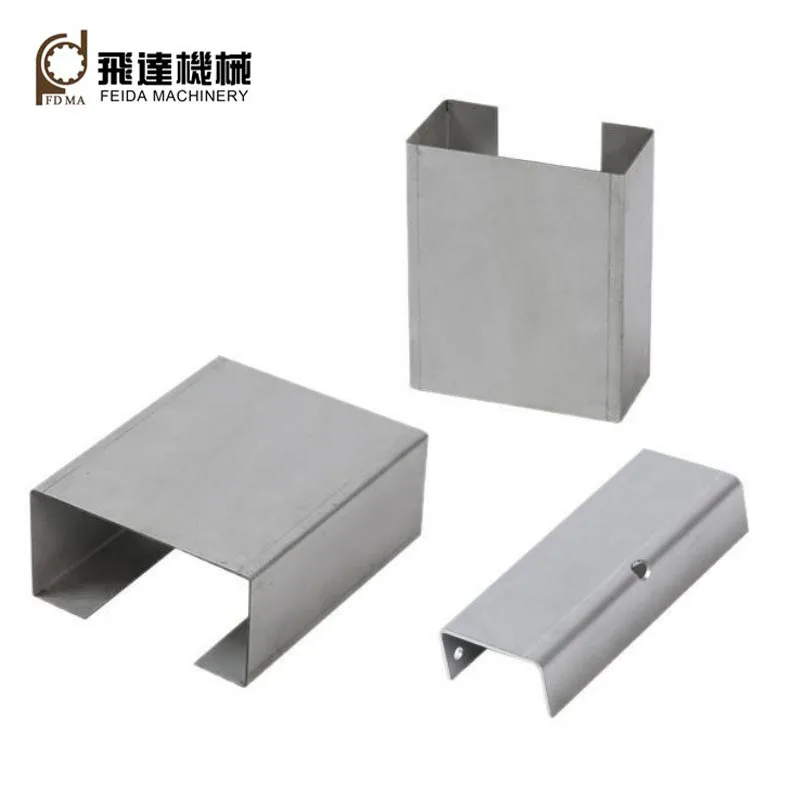
One of the most significant, yet often overlooked, efficiency advantages of sheet metal laser cutting is the reduction—or elimination—of secondary operations. After traditional cutting methods like plasma cutting or mechanical shearing, parts typically require deburring, grinding, or milling to achieve the required edge finish and dimensional accuracy. These secondary operations consume time, labor, and resources, and they introduce additional opportunities for errors. Laser cutting, by contrast, produces a clean, burr-free edge with a heat-affected zone (HAZ) that is typically less than 0.2 mm wide. This means that for many applications, the part is ready for use immediately after cutting, without the need for any finishing. Our factory has engineered our sheet metal laser cutting machines to deliver a surface roughness of Ra 3.2 µm or better, which is suitable for most welding and assembly processes.
Precision and edge quality features that reduce secondary operations:
- Narrow kerf width: The laser beam produces a kerf (cut width) of only 0.1 to 0.3 mm, depending on the material thickness. This narrow kerf results in minimal material removal and a smooth cut surface, eliminating the need for reaming or counterboring in many cases.
- Minimal heat-affected zone: Our laser cutting machines use advanced beam shaping and pulse control to minimize the heat input to the material. This results in a HAZ that is typically 0.1-0.2 mm, which does not affect the material's mechanical properties and does not require post-cut heat treatment or edge grinding.
- Excellent perpendicularity: The laser beam is highly collimated, producing cuts that are perpendicular to the surface with a taper angle of less than 0.5 degrees. This eliminates the need for edge squaring or milling operations commonly required after shearing or plasma cutting.
- Burr-free edges: With the correct assist gas and cutting parameters, laser cutting produces edges that are completely free of burrs. This eliminates the need for manual deburring, a labor-intensive and costly operation that is required after many conventional cutting methods.
A case study from a manufacturer of industrial enclosures in the United States highlights the impact of reduced secondary operations. The manufacturer was using plasma cutting for their enclosures, which left a rough, oxidized edge that required grinding and sanding before painting. After switching to our sheet metal laser cutting machine, the parts came off the machine with a clean, smooth edge that required no finishing. The company eliminated their entire deburring and grinding department, saving USD 120,000 in annual labor and overhead costs. Additionally, the precision of the laser cuts improved the fit-up of the enclosures, reducing welding time by 15 percent. The return on investment for the laser cutting machine was achieved in less than 18 months, purely from the savings in secondary operations.
Our factory at Feida Machinery conducts a comprehensive edge quality analysis for each customer's application. We measure the kerf width, HAZ size, and surface roughness using a profilometer and provide recommendations for optimizing the cutting parameters to achieve the desired edge quality. In many cases, we can achieve a surface finish that eliminates the need for any post-processing, allowing the customer to move directly from cutting to welding, assembly, or painting. This not only reduces production time and labor costs but also reduces the floor space required for secondary operations, further improving overall facility efficiency.
What Are the Key Technical Specifications of Our Sheet Metal Laser Cutting Machines?
Jinjiang Feida Machinery Co., Ltd. manufactures a comprehensive range of sheet metal laser cutting machines, including CO2 laser and fiber laser systems, to suit various industrial applications. Our product line includes machines with different laser powers, working areas, and cutting capabilities, from thin-gauge precision cutting to heavy-duty plate processing. The table below summarizes the key technical specifications for our most popular sheet metal laser cutting models, which are used in industries ranging from automotive and aerospace to construction and food processing. Our factory can also produce custom machines to meet specific production requirements, including extended travel ranges, automation interfaces, and special configurations.
| Model | Laser Type | Laser Power (kW) | Work Area (X x Y) mm | Max Cutting Speed (m/min) | Positioning Accuracy (mm) | Max Sheet Thickness (mm) | Assist Gas Options |
| FD-3015-3 | CO2 | 3 kW | 3000 x 1500 | 25 | +/- 0.05 | 20 (mild steel), 12 (stainless) | O2, N2, Air |
| FD-4020-4 | CO2 | 4 kW | 4000 x 2000 | 30 | +/- 0.05 | 25 (mild steel), 16 (stainless) | O2, N2, Air |
| FD-3015-F2 | Fiber | 2 kW | 3000 x 1500 | 35 | +/- 0.03 | 20 (mild steel), 16 (stainless), 10 (aluminum) | O2, N2, Air |
| FD-4020-F3 | Fiber | 3 kW | 4000 x 2000 | 45 | +/- 0.03 | 25 (mild steel), 20 (stainless), 12 (aluminum) | O2, N2, Air |
| FD-6025-F4 | Fiber | 4 kW | 6000 x 2500 | 55 | +/- 0.03 | 30 (mild steel), 25 (stainless), 15 (aluminum) | O2, N2, Air |
| FD-6025-F6 | Fiber | 6 kW | 6000 x 2500 | 65 | +/- 0.03 | 40 (mild steel), 30 (stainless), 20 (aluminum) | O2, N2, Air |
| FD-8025-F8 | Fiber | 8 kW | 8000 x 2500 | 75 | +/- 0.03 | 50 (mild steel), 40 (stainless), 25 (aluminum) | O2, N2, Air |
In addition to the standard models, our factory offers several optional features to further enhance efficiency and capability. These include an automatic pallet changer for uninterrupted production, a material handling system with a loading and unloading station, and a vision system for auto-alignment of sheets. We also offer a variety of cutting head options, including a high-speed head for thin Sheet Metal and a high-torque head for thick plate cutting. All our machines are equipped with a CNC controller with a user-friendly interface, a comprehensive cutting parameter database, and remote diagnostic capabilities for quick troubleshooting.
Our quality control process includes a 48-hour burn-in test on every machine, during which we cut sample parts and measure the accuracy and edge quality. We also conduct a final calibration of the laser beam and the axis drives to ensure that the machine meets the specified performance levels. Each machine is accompanied by a detailed test report and a set of training materials. Our factory at Jinjiang Feida Machinery Co., Ltd. provides a comprehensive warranty on all machine components and offers a full range of after-sales services, including installation, training, and maintenance contracts. With our extensive product range and commitment to quality, we are confident that we can provide the optimal sheet metal laser cutting solution for any industrial application.
How Can Automated Nesting and Material Handling Boost Overall Efficiency?
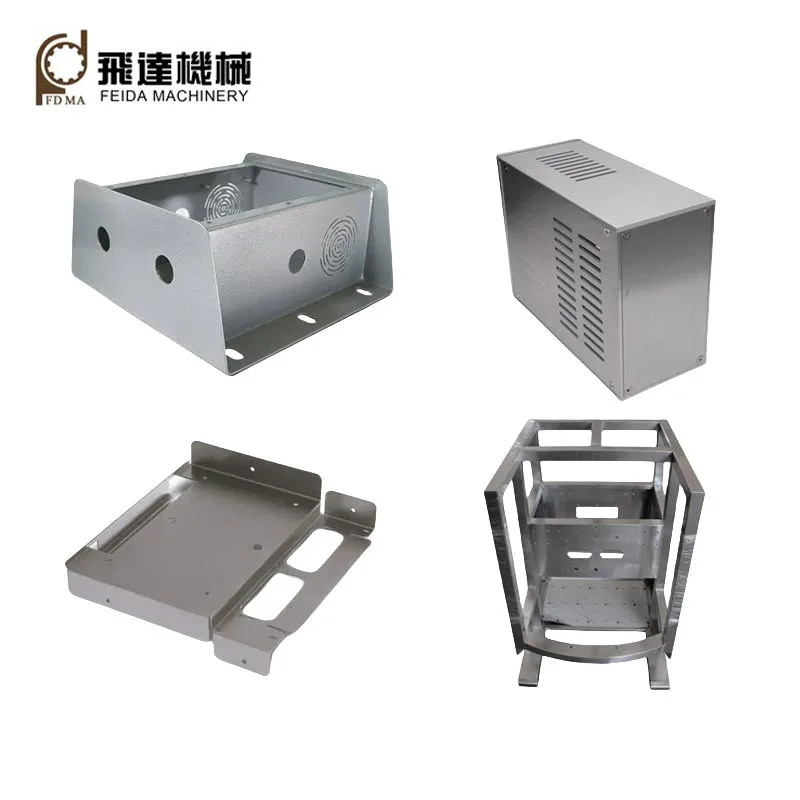
Cutting speed and edge quality are only part of the efficiency equation. The overall efficiency of a sheet metal laser cutting operation is also heavily influenced by how materials are utilized and how parts are handled before and after cutting. Automated nesting software and material handling systems are key to maximizing efficiency. Nesting software optimizes the arrangement of parts on the Sheet Metal to minimize waste, while material handling systems automate the loading and unloading of sheets, reducing labor and downtime. Our factory at Jinjiang Feida Machinery Co., Ltd. offers integrated solutions that combine our laser cutting machines with advanced nesting software and automation peripherals, providing a complete, high-efficiency production cell. This integration can reduce material waste by up to 25 percent and increase machine utilization by over 30 percent.
Key automation and nesting features that boost overall efficiency:
- Advanced nesting algorithms: Our nesting software uses genetic and heuristic algorithms to find the optimal arrangement of parts on the sheet. It can nest complex shapes, minimize scrap, and even optimize the cutting order to reduce thermal distortion. The software can also track material inventory and automatically select the most suitable sheet size for the required parts.
- Automatic sheet loading: An automated loading system uses vacuum suction cups or magnetic lifters to pick up a Sheet Metal from a pallet and place it onto the cutting table. This eliminates manual handling, reduces the risk of damage to the sheet, and allows the machine to start cutting immediately after the previous job is finished.
- Unloading and sorting: After cutting, the parts and the skeleton (the leftover material) are automatically removed from the table. The parts can be sorted by size or shape using a conveyor system, ready for the next production stage. This reduces the time required for post-cut handling and keeps the machine working continuously.
- Just-in-time (JIT) production: The combination of fast cutting, automated nesting, and material handling enables just-in-time production, where parts are produced exactly when they are needed, reducing work-in-progress inventory and freeing up factory floor space.
A real-world example from an agricultural equipment manufacturer in Brazil illustrates the efficiency gains from automation. The manufacturer was using a manual cutting process with a significant amount of waste (approximately 25 percent material utilization) and requiring three operators per shift for handling and cutting. After installing our fiber laser cutting machine with an automated pallet changer and nesting software, material utilization improved to 92 percent, and the machine required only one operator per shift. The factory was able to reduce its inventory of Sheet Metal by 30 percent and cut lead times from two weeks to two days. The return on investment for the complete system was achieved in 14 months, primarily from material savings and labor reductions.
Our factory provides a comprehensive automation design service for each customer, analyzing their production flow and recommending the optimal combination of laser cutting machine, nesting software, and material handling equipment. We also offer training for operators on the use of the nesting software and the automated systems, ensuring that they can fully exploit the capabilities of the equipment. By integrating these technologies, manufacturers can achieve a level of efficiency that is simply not possible with stand-alone cutting machines, positioning themselves for competitiveness in the global market. At Jinjiang Feida Machinery Co., Ltd., we believe that sheet metal laser cutting is not just a machine; it is a gateway to a more efficient, automated, and profitable production process.
Frequently Asked Questions (FAQ)
Question 1: What types of sheet metal can be cut with a laser cutting machine?
Answer: Laser cutting machines are capable of cutting a wide range of metals, including mild steel, stainless steel, aluminum, copper, brass, and titanium. The cutting capability depends on the laser power and the material's reflectivity and thermal conductivity. For example, a 3 kW fiber laser can cut mild steel up to 25 mm thick, stainless steel up to 20 mm, and aluminum up to 15 mm. Our factory provides a detailed material compatibility chart to help you select the right machine for your specific sheet metal types. We also offer specialized cutting parameters for difficult materials such as reflective metals (copper and aluminum) to ensure efficient and reliable cutting.
Question 2: How much material waste can be reduced with automated nesting software?
Answer: Automated nesting software can significantly reduce material waste compared to manual nesting. In typical applications, the improvement ranges from 15 to 30 percent depending on the part geometry and the sheet size. For example, if a manual nesting process yields a material utilization rate of 70 percent (30 percent waste), automated nesting can often increase this to 85-92 percent (8-15 percent waste). This reduction in waste can lead to substantial savings in material costs, especially for high-volume production. Our nesting software also allows for the reuse of skeleton remnants for smaller parts, further reducing waste.
Question 3: What is the typical maintenance required for a sheet metal laser cutting machine?
Answer: Regular maintenance is essential to keep a laser cutting machine operating at peak efficiency. Typical maintenance tasks include: cleaning the optics (lens and mirrors) weekly, checking and replacing the assist gas filters, lubricating the linear guides and ball screws, and inspecting the cooling system (chiller) for proper operation. The laser source itself requires minimal maintenance, but it is recommended to have the laser power and beam quality checked annually by a qualified technician. Our factory provides a comprehensive maintenance schedule and offers service contracts to minimize downtime and ensure consistent cutting performance.
Question 4: How does laser cutting compare to waterjet cutting in terms of efficiency?
Answer: Laser cutting is generally faster than waterjet cutting for thin to medium thicknesses (up to 25 mm) and offers higher precision and finer edge quality. Waterjet cutting is slower but can cut thicker materials and has the advantage of no heat-affected zone, making it suitable for heat-sensitive materials. In terms of efficiency, laser cutting typically offers higher throughput and lower operating costs (no abrasive consumption) for most industrial sheet metal applications. For example, a 4 kW fiber laser can cut 10 mm mild steel at approximately 3 m/min, while waterjet would cut the same material at 0.3-0.5 m/min. However, waterjet may be preferred for very thick materials or those that cannot tolerate high temperatures.
Question 5: Does Jinjiang Feida Machinery Co., Ltd. offer training for operators of its sheet metal laser cutting machines?
Answer: Yes, we provide comprehensive training for all our sheet metal laser cutting machines. The training typically covers: machine safety, operation of the CNC controller, use of the nesting software, loading and unloading procedures, and basic maintenance. Training can be conducted at our factory or at the customer's site, and we offer both initial training and refresher courses. We also provide a detailed operator manual and video tutorials to support the training. Our goal is to ensure that your team is fully competent to operate the machine safely and efficiently, maximizing your return on investment.
Conclusion: Achieve Peak Production Efficiency with Sheet Metal Laser Cutting
Sheet metal laser cutting is a transformative technology that delivers significant improvements in industrial part production efficiency. Through higher cutting speeds, exceptional precision, reduced secondary operations, and the integration of automated nesting and material handling, laser cutting enables manufacturers to produce more parts in less time, with less waste and lower labor costs. At Jinjiang Feida Machinery Co., Ltd., our factory has engineered a comprehensive range of sheet metal laser cutting machines that are designed to meet the diverse needs of modern industry, from thin-gauge precision components to heavy plate fabrication. Our commitment to quality, innovation, and customer support ensures that our machines deliver reliable, high-performance cutting day after day.
Are you ready to take your sheet metal production to the next level of efficiency? Contact Jinjiang Feida Machinery Co., Ltd. today for a comprehensive efficiency consultation. Our team will analyze your current production process and recommend the optimal sheet metal laser cutting machine, with the right power, work area, and automation options to maximize your productivity. We offer free sample cutting, competitive pricing, and a full range of after-sales services. Request your free efficiency analysis now from Jinjiang Feida Machinery Co., Ltd. and discover how our sheet metal laser cutting machines can transform your industrial part production.
Related News
- Why Plastic Straight Bevel Gears Become Cost-Effective Light-Duty Transmission Solutions For Electronic & Medical Equipment?
- Why Precision Metal Helical Gears Become Preferred Transmission Parts For High-Standard Industrial Equipment?
- Modular Gear Reducer Designs Adapt to Multiple Power Transmission Scenarios
- High-Precision Gear Processing Solutions for Heavy-Load and High-Speed Operating Conditions
- Precision Machined OEM Components Address Customization and Volume Production
Leave me a message