English
- English
- беларускі
- Hrvatski
- Тоҷикӣ
- O'zbek
- Español
- Português
- русский
- Français
- 日本語
- Deutsch
- tiếng Việt
- Italiano
- Nederlands
- ภาษาไทย
- Polski
- 한국어
- Svenska
- magyar
- Malay
- বাংলা ভাষার
- Dansk
- Suomi
- हिन्दी
- Pilipino
- Türkçe
- Gaeilge
- العربية
- Indonesia
- Norsk
- تمل
- český
- ελληνικά
- український
- Javanese
- فارسی
- தமிழ்
- नेपाली
- български
- ລາວ
- Latine
- Қазақша
- Euskal
- Azərbaycan
- Slovenský jazyk
- Lietuvos
- Eesti Keel
- Română
- Slovenski
- Srpski језик

News
How Do Spiral Bevel Gears Improve Power Transmission in Demanding Machinery?
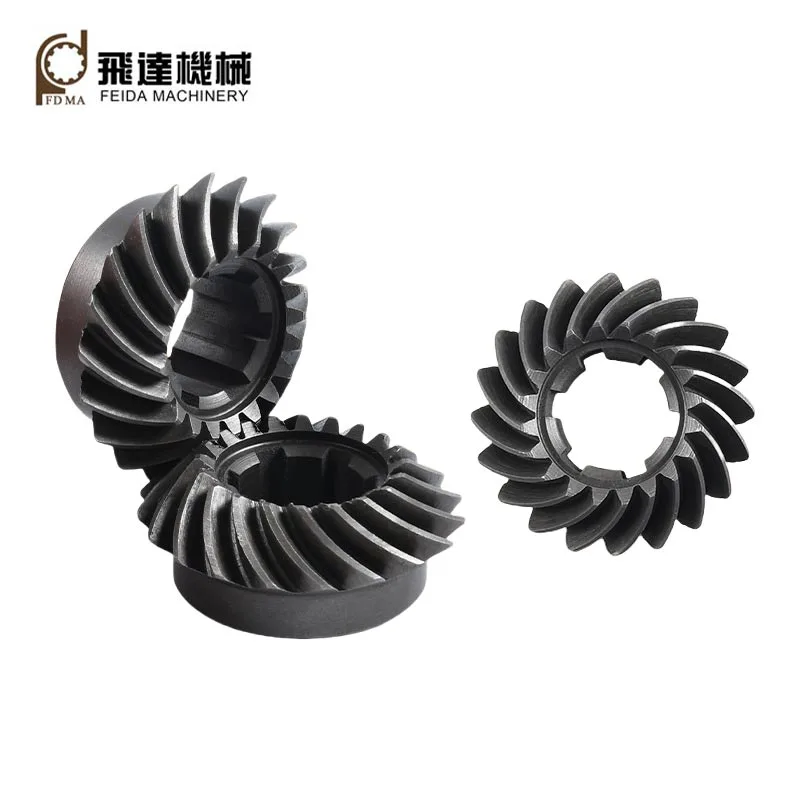
Spiral bevel gears are precision transmission components designed to transfer rotational power between intersecting shafts while providing smooth, reliable and efficient operation. Compared with conventional straight bevel gears, their curved tooth geometry allows gradual tooth engagement, helping reduce vibration, operating noise and impact loads. This makes them particularly valuable in industrial gearboxes, automotive systems, material-handling equipment, machine tools, agricultural machinery and other applications where compact construction and dependable torque transmission are essential.
This guide explains the working principles, key advantages, common applications, material considerations, performance factors, maintenance requirements and purchasing considerations for Spiral Bevel Gears. It also highlights common customer problems and practical ways to avoid premature wear, excessive noise, overheating and transmission failure.
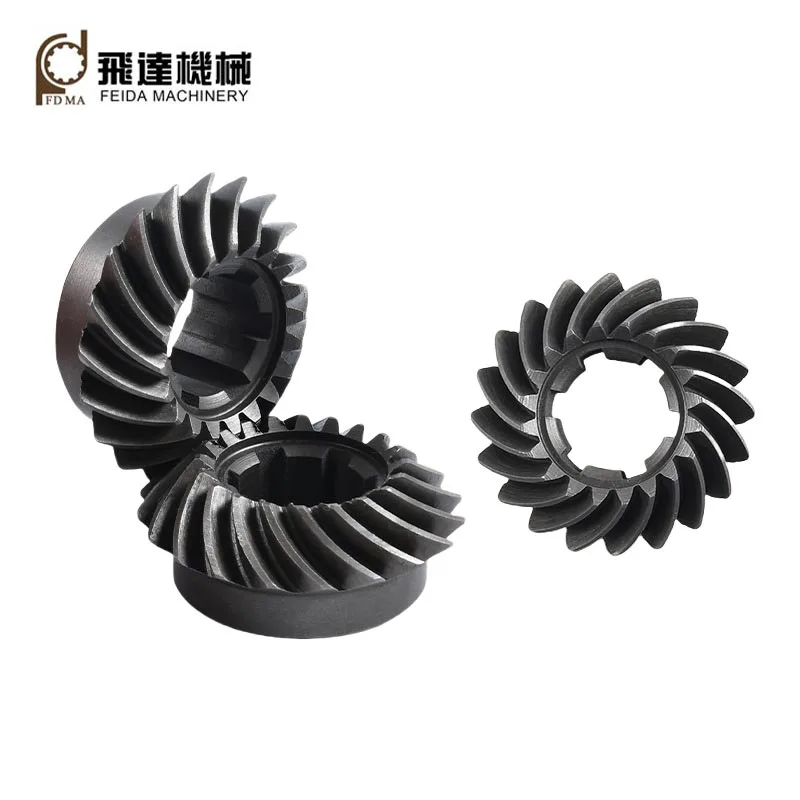
Table of Contents
1. What Are Spiral Bevel Gears? 2. How Spiral Bevel Gears Work 3. Major Advantages 4. Industrial Applications 5. Important Selection Factors 6. Materials and Manufacturing 7. Maintenance and Service Life 8. Spiral vs. Straight Bevel Gears 9. Common Purchasing Mistakes 10. Frequently Asked Questions 11. Conclusion
What Are Spiral Bevel Gears?
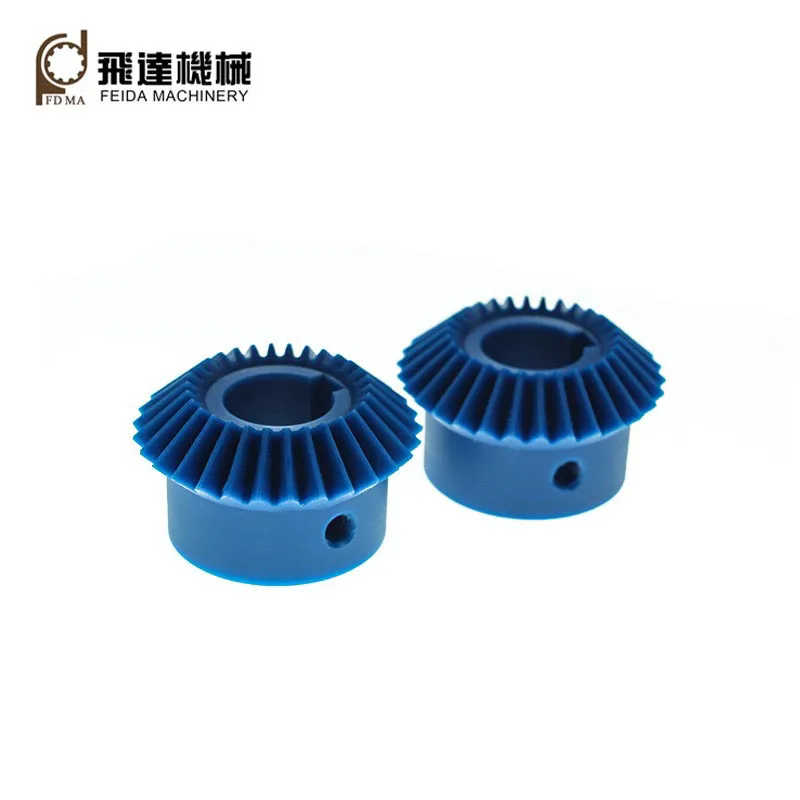
Spiral Bevel Gears are bevel gears with curved, angled teeth that are typically used to transmit motion and torque between shafts positioned at an angle, commonly at approximately 90 degrees. Their spiral tooth profile creates a more gradual engagement between mating teeth than a straight bevel gear.
This gradual contact is one of the primary reasons these gears are widely used in equipment where smooth rotation, reduced vibration and dependable torque transmission matter. Instead of having the entire tooth width engage abruptly, the spiral geometry allows contact to progress across the tooth surface.
For machinery manufacturers, this can translate into more stable operation, improved operator comfort and reduced mechanical shock. For replacement-parts buyers, however, selecting the correct geometry is critical because even a high-quality gear can perform poorly if its tooth specifications, dimensions or mating components are incompatible.
How Do Spiral Bevel Gears Work?
The operating principle is straightforward: one bevel gear, commonly called the pinion, drives another bevel gear. Because the teeth are arranged on conical surfaces, rotational motion can be redirected from one shaft to another while simultaneously transferring torque.
Key operating sequence:
- The driving gear receives rotational power from a motor or other power source.
- The spiral teeth gradually enter the contact zone of the mating gear.
- Force is transmitted through the tooth surfaces as the gears rotate.
- The driven gear transfers the resulting torque to the output shaft.
- The gear ratio determines the relationship between input and output speed and torque.
Because tooth engagement is progressive, Spiral Bevel Gears can provide smoother power transfer at higher rotational speeds than many straight-tooth alternatives. Correct alignment remains essential. Poor shaft positioning, incorrect backlash or insufficient lubrication can significantly reduce these benefits.
What Are the Major Advantages of Spiral Bevel Gears?
Smooth Power Transmission
The gradual tooth engagement helps minimize sudden impacts between mating teeth, supporting smoother rotation and more consistent torque transfer.
Lower Operating Noise
The continuous nature of tooth contact can reduce mechanical shock and vibration, making spiral designs suitable for equipment where noise control is important.
High Load Capability
The tooth geometry provides substantial contact between mating gears, making properly designed systems suitable for demanding torque transmission.
Compact Drive Layout
Bevel gearing makes it possible to redirect power between intersecting shafts without requiring a large mechanical structure.
These advantages are particularly valuable when machinery operates continuously. Reduced vibration and controlled tooth engagement can help protect bearings, shafts and other connected components from unnecessary mechanical stress.
Where Are Spiral Bevel Gears Commonly Used?
Spiral Bevel Gears are used across many mechanical systems that require reliable angular power transmission. Their combination of smooth engagement, compact construction and torque-handling capability makes them useful in both standard and specialized machinery.
| Industry or Equipment | Typical Requirement | Why Spiral Bevel Gears Help |
|---|---|---|
| Industrial Gearboxes | Reliable angular transmission | Smooth torque transfer and compact design |
| Automotive Machinery | High-speed rotational transmission | Reduced vibration and controlled tooth engagement |
| Machine Tools | Precision and stable operation | Smooth motion and accurate transmission |
| Agricultural Equipment | Torque under variable loads | Durable construction and strong load performance |
| Material Handling Systems | Continuous operation | Reliable performance and reduced mechanical shock |
Which Factors Matter When Selecting Spiral Bevel Gears?
Choosing a gear based only on outside diameter or price is a common purchasing mistake. The gear must match the complete transmission system. Before requesting a quotation, machinery manufacturers and maintenance teams should prepare the essential operating parameters.
- Gear ratio: Confirm the required relationship between input and output speed.
- Torque: Identify normal, peak and potential shock loads.
- Rotational speed: Higher speeds place greater demands on precision, balancing and lubrication.
- Pressure angle: The gear specification must be compatible with its mating component.
- Spiral angle: This affects tooth engagement, load distribution and operating characteristics.
- Gear dimensions: Bore size, outside diameter, face width and mounting dimensions must fit the machine.
- Material: Material and heat-treatment requirements should reflect the operating load and expected service life.
- Environmental conditions: Dust, moisture, temperature and corrosive conditions can influence material and surface-treatment requirements.
- Backlash: Correct clearance is essential for smooth operation and thermal expansion management.
Practical tip: When replacing an existing gear, providing the old gear, technical drawing, equipment model or complete dimensional information can significantly reduce the risk of ordering an incompatible component.
How Do Materials and Manufacturing Affect Gear Performance?
Gear performance depends not only on tooth geometry but also on material selection, machining accuracy and heat treatment. Industrial Spiral Bevel Gears often need to withstand repeated contact stress, bending forces and fluctuating loads over long operating periods.
Common gear materials include alloy steels and other engineering materials selected according to load, speed, environment and cost requirements. Heat treatment can improve hardness, wear resistance and fatigue performance, while precision machining helps achieve accurate tooth geometry and proper mating contact.
Manufacturing quality becomes especially important for high-speed or high-load applications. Small dimensional deviations can affect tooth contact, backlash, vibration and noise. A reliable manufacturer should therefore be able to control critical dimensions and maintain consistent production quality across batches.
Jinjiang Feida Machinery Co., Ltd. focuses on machinery transmission components and can support customers who require dependable gear solutions for different mechanical applications. For customized requirements, technical drawings, dimensions, material specifications and operating conditions should be discussed before production.
How Can Proper Maintenance Extend Gear Service Life?
Even a well-manufactured gear can experience premature failure when installation or maintenance is neglected. Many gear problems are not caused by the tooth design itself but by contamination, misalignment, inadequate lubrication or excessive loading.
- Use suitable lubrication. Select lubricant according to the gearbox design, operating speed, temperature and manufacturer's recommendations.
- Check alignment. Shaft misalignment can concentrate loads on specific portions of the teeth and accelerate wear.
- Monitor backlash. Excessive or insufficient backlash can contribute to noise, heat generation and tooth damage.
- Keep the system clean. Foreign particles can damage precision tooth surfaces and accelerate abrasive wear.
- Inspect unusual noise. Changes in sound or vibration may indicate wear, incorrect contact or lubrication problems.
- Avoid overload. Repeated operation beyond the intended torque rating can cause tooth bending or surface fatigue.
- Monitor temperature. Abnormally high temperatures may indicate excessive friction, poor lubrication or other transmission problems.
Routine inspection is especially important for equipment operating continuously or under variable loads. Detecting abnormal wear early is generally less expensive than replacing an entire gearbox or dealing with unexpected production downtime.
Spiral Bevel Gears vs. Straight Bevel Gears
Both gear types are designed to transmit motion between intersecting shafts, but their tooth geometry creates different operating characteristics.
| Feature | Spiral Bevel Gears | Straight Bevel Gears |
|---|---|---|
| Tooth Profile | Curved or spiral teeth | Straight teeth |
| Tooth Engagement | More gradual | More abrupt |
| Noise and Vibration | Generally lower when correctly designed and installed | Can be higher, particularly at increased speeds |
| High-Speed Applications | Often well suited | More application dependent |
| Manufacturing Requirements | Typically more demanding | Generally simpler |
The right choice ultimately depends on the machinery's operating conditions rather than simply choosing the more advanced design. Application requirements should always determine the gear configuration.
What Common Mistakes Should Buyers Avoid?
Gear purchasing can become complicated when buyers focus on a single specification. Several avoidable mistakes can lead to poor performance or compatibility issues.
- Buying by appearance only: Similar-looking gears can have completely different tooth specifications.
- Ignoring operating conditions: Speed, torque, temperature and load cycles directly affect gear requirements.
- Choosing price over total value: A low initial cost may become expensive if the gear causes frequent downtime or premature replacement.
- Failing to verify the mating gear: A new gear must work correctly with its paired component.
- Neglecting tolerances: Precision dimensions and backlash are important for reliable operation.
- Providing incomplete information: Missing drawings or dimensions can increase communication time and the possibility of errors.
A professional supplier should be willing to review technical requirements rather than simply quote a product based on one dimension. This approach is particularly important for OEM, replacement and customized machinery projects.
Frequently Asked Questions About Spiral Bevel Gears
What are Spiral Bevel Gears mainly used for?
They are mainly used to transmit rotational power and torque between intersecting shafts, especially where smooth operation, compact transmission layouts and dependable performance are required.
Are Spiral Bevel Gears suitable for high-speed machinery?
They can be suitable for high-speed machinery because their curved tooth geometry supports gradual engagement and can reduce vibration and noise. However, actual suitability depends on gear design, manufacturing accuracy, lubrication, alignment and operating conditions.
Why do Spiral Bevel Gears become noisy?
Excessive noise can result from incorrect backlash, poor alignment, damaged teeth, inadequate lubrication, manufacturing errors or unsuitable operating loads. Noise that suddenly increases should be investigated rather than ignored.
Can Spiral Bevel Gears be customized?
Yes. Gear dimensions, tooth specifications, materials, bore configurations and other requirements can be customized for specific machinery projects, provided the manufacturer has the necessary technical information.
What information should I provide when ordering a gear?
Useful information includes drawings, dimensions, gear ratio, tooth count, module or diametral pitch, pressure angle, shaft arrangement, material, heat-treatment requirements, operating speed, torque and application environment.
How can I reduce premature gear failure?
Use a correctly specified gear, maintain proper alignment and backlash, provide suitable lubrication, prevent contamination and avoid operating beyond the intended load and speed range. Regular inspection can also identify developing problems before serious damage occurs.
Conclusion: Building a More Reliable Transmission System
Spiral Bevel Gears provide an effective solution for machinery that needs to redirect rotational power between intersecting shafts while maintaining smooth and dependable operation. Their spiral tooth geometry can help improve contact characteristics, reduce mechanical shock and support stable torque transmission.
However, gear quality alone does not determine transmission performance. The correct combination of geometry, dimensions, material, heat treatment, manufacturing precision, lubrication and installation is essential. Buyers should therefore evaluate the complete operating environment instead of selecting a gear based solely on size or price.
For manufacturers, equipment integrators and replacement-parts buyers, working with an experienced supplier can simplify specification confirmation and reduce the risk of compatibility problems. Jinjiang Feida Machinery Co., Ltd. can work with customers on machinery transmission requirements and customized gear solutions based on technical drawings, samples and application specifications.
Need the Right Gear for Your Machinery?
Whether you need replacement Spiral Bevel Gears, OEM production or a customized transmission component, accurate technical information is the first step toward a reliable solution. Share your drawings, dimensions, operating requirements or existing gear samples with Jinjiang Feida Machinery Co., Ltd. and let our team help you identify a suitable solution.
Contact us today to discuss your gear requirements and request a professional quotation.
Previous :
-
Related News
- What Makes Sprocket Gears Essential for Reliable Power Transmission?
- How Do Internal Gears Improve Precision and Power Transmission?
- What costly downstream failures stem from overlooked spline‑shaft manufacturing process gaps?
- Why Are Plastic Helical Gears Becoming a Reliable Choice for Modern Mechanical Systems?
- Can in‑house spline production solve machinery OEMs’ costly field‑failure headaches?
- Will full-process integrated gear machining cut overseas reducer manufacturers’ three major hidden procurement losses?
Leave me a message