English
- English
- беларускі
- Hrvatski
- Тоҷикӣ
- O'zbek
- Español
- Português
- русский
- Français
- 日本語
- Deutsch
- tiếng Việt
- Italiano
- Nederlands
- ภาษาไทย
- Polski
- 한국어
- Svenska
- magyar
- Malay
- বাংলা ভাষার
- Dansk
- Suomi
- हिन्दी
- Pilipino
- Türkçe
- Gaeilge
- العربية
- Indonesia
- Norsk
- تمل
- český
- ελληνικά
- український
- Javanese
- فارسی
- தமிழ்
- नेपाली
- български
- ລາວ
- Latine
- Қазақша
- Euskal
- Azərbaycan
- Slovenský jazyk
- Lietuvos
- Eesti Keel
- Română
- Slovenski
- Srpski језик

Products
Alloy Helical Transmission Gears
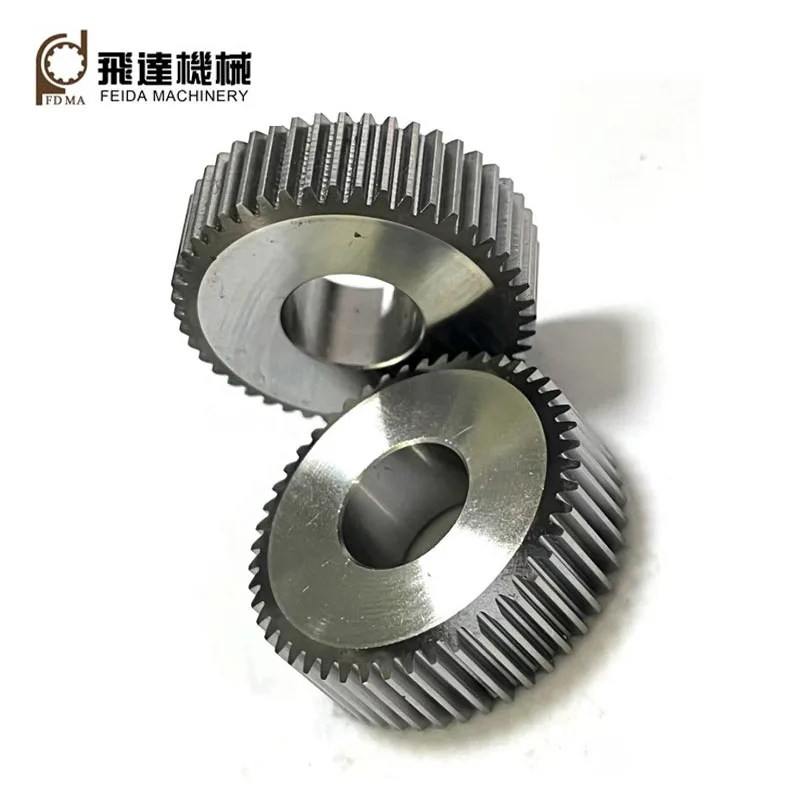
Alloy helical transmission gears are precision power transmission components designed to handle high torque, high speed, and continuous duty cycles across demanding industries. The angled tooth profile engages gradually, distributing load across the face width and reducing vibration, noise, and shock loads compared to spur gearing. For engineers specifying drivetrain hardware, our Steel Helical Gear Components are produced from case-hardened alloy steels and can be matched with Metal Helical Pinion Sets to achieve precise shaft center distances and minimal backlash. Heavy-duty applications benefit from Metallic Helical Gear Wheels that deliver stable contact fatigue strength under cyclic loading. For complete driveline integration, these elements are commonly combined with Industrial Helical Metal Gear Parts to form robust gear stages with controlled axial thrust and alignment.
Alloy Helical Transmission Gears are available in a wide range of geometric configurations, material grades, and tooth flank finishes to support both prototype and high-volume production programs. The tables below summarize standard manufacturing capabilities and key design parameters.
- Material options: 20CrMnTi, 40Cr, 42CrMo, 17CrNiMo6, AISI 8620, AISI 4140, AISI 4340, SAE 9310, and ductile iron for large-diameter wheels
- Module range: 0.5 mm to 20 mm for metric gears; diametral pitch 32 DP to 1 DP for inch-based designs
- Pressure angle: 20° standard; 14.5° and 25° available on request
- Helix angle: 5° to 45°, left-hand or right-hand, with common 15° and 23° optimizations
- Number of teeth: 10 to 200 for pinions and wheels; larger segmented wheels available up to 600 teeth
- Face width: 8 mm to 400 mm, optimized to control contact ratio and axial thrust
- Outside diameter: 10 mm to 1,500 mm; larger diameters available as assembled or segmented gears
- Accuracy grades: DIN 5 to DIN 10, AGMA 8 to AGMA 14, JIS N5 to N10
- Heat treatment: carburizing, carbonitriding, induction hardening, nitriding, and through hardening
- Surface hardness: HRC 45 to HRC 62 after heat treatment; case depth typically 0.5 mm to 3.5 mm depending on module
- Tooth flank finish: hobbed, shaved, ground, honed, or superfinished; ground tooth roughness Ra 0.4–0.8 µm
- Balancing: static and dynamic balancing to ISO 21940 G2.5 for high-speed assemblies
| Parameter | Standard Range | Custom / High-Precision Option |
|---|---|---|
| Module (m) | 1.0 mm – 10 mm | 0.5 mm – 20 mm |
| Diametral Pitch (DP) | 8 DP – 2 DP | 32 DP – 1 DP |
| Helix Angle (β) | 15° – 23° | 5° – 45° LH/RH |
| Pressure Angle (α) | 20° | 14.5° / 25° |
| Accuracy Class | DIN 7 / AGMA 10 | DIN 5 / AGMA 14 ground |
| Tooth Surface Hardness | HRC 58 – 62 | HRC 45 – 62 |
| Case Depth | 0.6 mm – 1.8 mm | 0.5 mm – 3.5 mm |
| Bore Diameter | 6 mm – 200 mm | Custom keyway, spline, or shrink disc interface |
| Face Width | 10 mm – 150 mm | Up to 400 mm |
| Outside Diameter | 100 mm – 800 mm | Up to 1,500 mm |
| Material Options | 20CrMnTi, 42CrMo, AISI 8620 | 17CrNiMo6, SAE 9310, AISI 4340 |
| Heat Treatment | Carburizing + quench | Nitriding, induction, through-hardening |
| Tooth Finish | Hobbed / shaved | Ground / honed / superfinished |
Design selection depends on operating torque, speed, duty cycle, and center distance constraints. Higher helix angles reduce noise but increase axial thrust, so thrust bearings or double helical arrangements may be required for values above 30°. Case-carburized alloys with ground tooth flanks are recommended for high-speed, high-load stages, while through-hardened or induction-hardened gears offer a cost-effective option for moderate loads. For severe misalignment conditions, crowned teeth improve contact longevity; for compact gearboxes, high pressure angles of 25° increase root strength and reduce tooth count without undercutting. Finite element analysis of root bending and surface pitting is available during the quotation phase.
- Applications: industrial gearboxes, automotive transmissions, mining conveyors, agricultural machinery, marine propulsion, wind turbine pitch drives, robotics, and material handling equipment
- Quality assurance: ISO 9001, IATF 16949, and AGMA 2000 inspection protocols
- Noise and efficiency: ground and superfinished helical sets typically achieve transmission efficiency above 98% and noise levels below 75 dB(A) in high-speed stages
- Customization: keyways, splines, tapped holes, set screws, and special hub configurations are machined to customer drawings
- Prototyping: 3D CAD models and FEA-based tooth contact analysis are provided for design validation before production
- Performance data: core material tensile strength 1,000 – 1,300 MPa, allowable contact stress 1,200 – 1,600 MPa, maximum pitch line velocity 3,000 m/min for ground teeth with oil lubrication, operating temperature range -40°C to +180°C
Related Products




Hot Products
Sheet Metal Stamping
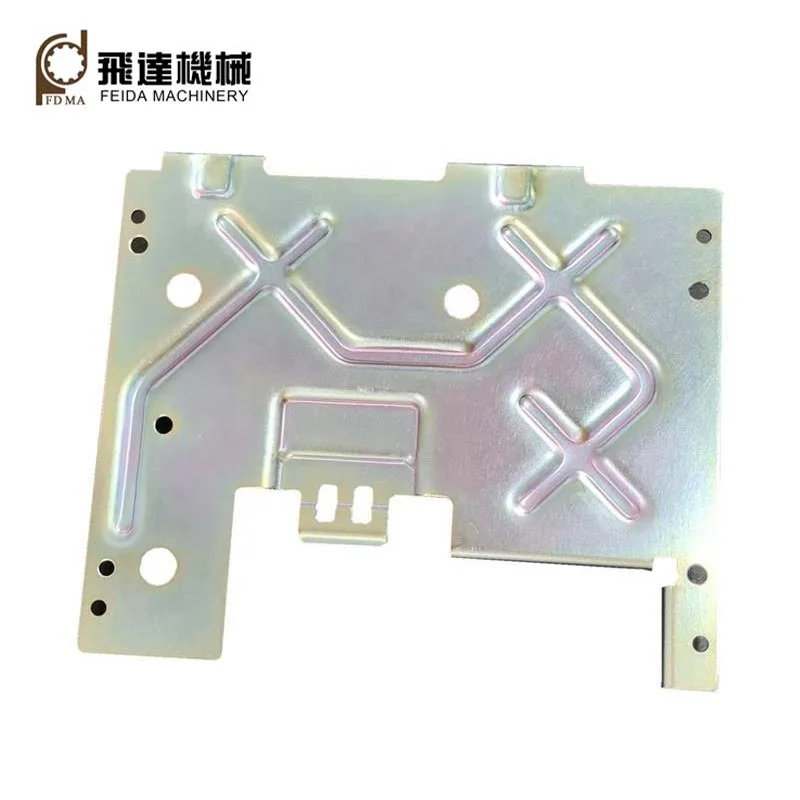
As a professional manufacturer,exporter, Feida Machinery would like to provide you high quality sheet metal stamping service.These technology offers many advantages,such as high efficiency, high consistency,high speed,etc.OEM and ODM services are acceptable,Welcome to contact for cooperation!
Steel Cnc Machining
Our Factory ,Feida Machinery Co., Ltd , a professional manufacturer, would like to provide you high quality steel CNC machining services. By buying our service, you will be able to have full-time service, from part production and packaging to after-sales service. Welcome to contact us for customization!
Sheet Metal Assembly
Feida Machinery has 15+ years of experience in sheet metal assembly service.
Depending on the high quality and superior service,We have earned the trust of new and old clients at home and abroad. Welcome to contact us for cooperation!
CNC Machining Parts with Spline
Feida Machinery is a professional manufacturer specializing in producing CNC machining parts with spline since 1988.High-quality and competitive price are what every customer wants, and that's exactly what we offer. Of course, also essential is our perfect after-sales service. If you are interested in our products, you can consult us now, we will reply to you in time!
CNC Milling
Feida Machinery's high quality CNC milling parts offer several advantages, including high precision, efficiency, versatility, and cost-effectiveness. It allows for the creation of complex shapes and intricate designs. Welcome new and old customers to continue to cooperate with us to create a better future!
Carbon Steel Sheet Metal
High quality carbon steel sheet metal parts will be offered to you because Feida Machinery has its own equipment for the entire production process from mold design, prototype development, processing, assembly to surface coating and a high-level team of engineers .Welcome new and old customers to continue to cooperate with us to create a better future!
- Related Blog
- Reviews
