
English
- English
- беларускі
- Hrvatski
- Тоҷикӣ
- O'zbek
- Español
- Português
- русский
- Français
- 日本語
- Deutsch
- tiếng Việt
- Italiano
- Nederlands
- ภาษาไทย
- Polski
- 한국어
- Svenska
- magyar
- Malay
- বাংলা ভাষার
- Dansk
- Suomi
- हिन्दी
- Pilipino
- Türkçe
- Gaeilge
- العربية
- Indonesia
- Norsk
- تمل
- český
- ελληνικά
- український
- Javanese
- فارسی
- தமிழ்
- नेपाली
- български
- ລາວ
- Latine
- Қазақша
- Euskal
- Azərbaycan
- Slovenský jazyk
- Lietuvos
- Eesti Keel
- Română
- Slovenski
- Srpski језик

Products
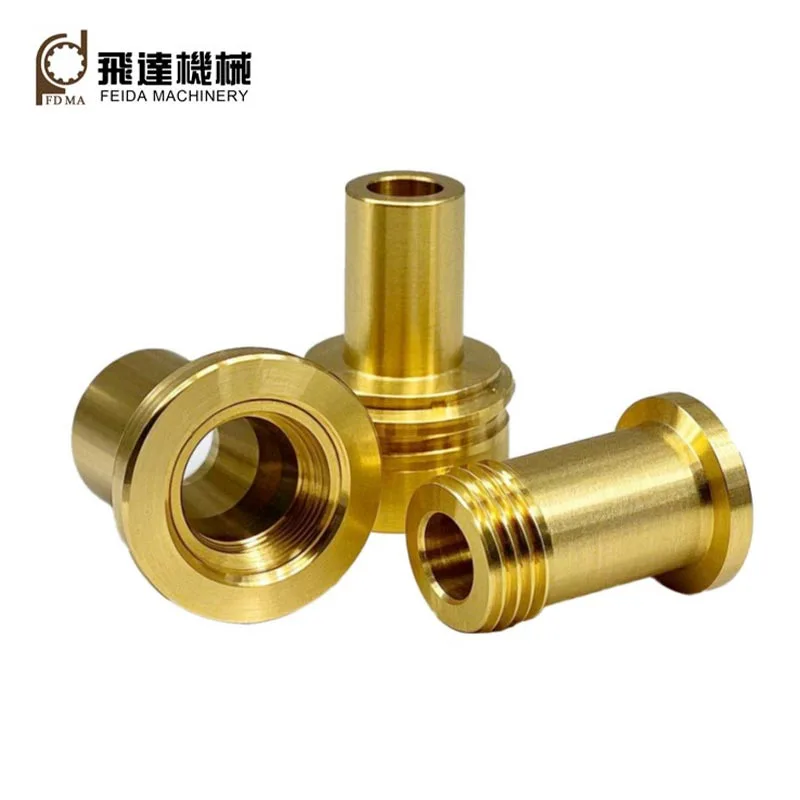
Custom Copper CNC Turned Parts
Custom copper CNC turned parts deliver high electrical conductivity, excellent thermal transfer, and strong corrosion resistance for demanding industrial applications. Our manufacturing cell machines solid copper alloy bar stock into complex geometries with outer diameters from 0.5 mm to 200 mm and lengths up to 500 mm. Single-setup operations include threading, knurling, grooving, drilling, and cross-hole machining. These components pair with our broader precision metal portfolio, including Brass CNC Turned Components for valve bodies and sensor housings, Copper Alloy Machined Fittings for hydraulic and pneumatic connectors, Precision Brass Threaded Inserts for injection-molded assemblies, and Brass Machining Hardware Fittings for custom bracketry and fastening systems. Automated bar feeders, sub-spindles, and in-process probing maintain tight dimensional control across runs from 10 to 100,000 pieces. Copper’s natural antimicrobial properties and high recyclability also make these parts suitable for medical devices and sustainable energy systems. Every batch undergoes CMM inspection and optical comparator verification against ISO 2768-mK or customer-specific GD&T callouts.
Custom Copper CNC Turned Parts are manufactured in a wide range of copper alloys, each selected for specific mechanical, electrical, and thermal requirements. The table below summarizes the most commonly specified materials and their key properties.
| Material Grade | UNS Designation | Electrical Conductivity (% IACS) | Tensile Strength (MPa) | Typical Applications |
|---|---|---|---|---|
| ETP Copper | C11000 | 100 | 220–310 | Busbars, terminals, heat sinks |
| Oxygen-Free Copper | C10100 | 101 | 220–350 | Vacuum components, waveguides |
| Tellurium Copper | C14500 | 90 | 240–380 | Electrical contacts, switch parts |
| Sulfur Copper | C14700 | 95 | 220–320 | Machined studs, fasteners |
| Chromium Copper | C18200 | 80 | 310–550 | Resistance welding electrodes |
| Free-Cutting Brass | C36000 | 26 | 340–470 | Fittings, inserts, valve bodies |
Technical capabilities for Custom Copper CNC Turned Parts include:
- Multi-axis CNC turning with live tooling, sub-spindle, and bar feeding up to 65 mm in diameter
- Internal and external threading via single-point cutting, thread rolling, and thread whirling
- Tolerances down to ±0.005 mm on diameters and ±0.01 mm on lengths; concentricity held within 0.01 mm
- Surface finishes from Ra 0.8 μm to Ra 0.2 μm with optional electropolishing
- Secondary processes: silver plating, tin plating, nickel plating, passivation, and laser engraving
- Inspection with CMM, laser micrometer, surface profilometer, and optical comparator
- Certifications: ISO 9001:2015, IATF 16949 for automotive copper parts, RoHS and REACH compliant materials
Typical applications for Custom Copper CNC Turned Parts include electrical connectors, grounding lugs, heat exchanger fittings, pneumatic push-to-connect bodies, water purification components, and high-current switch parts. These components are also frequently used in marine hardware where copper's corrosion resistance prevents galling and seizing.
The following tolerance table applies to standard Custom Copper CNC Turned Parts without specific customer callouts:
| Feature | Standard Tolerance | Precision Tolerance |
|---|---|---|
| Outer diameter (1–30 mm) | ±0.05 mm | ±0.005 mm |
| Outer diameter (30–100 mm) | ±0.08 mm | ±0.01 mm |
| Length up to 100 mm | ±0.10 mm | ±0.02 mm |
| Length 100–500 mm | ±0.20 mm | ±0.05 mm |
| Thread pitch diameter | 6g / 6H per ISO 965 | 4g / 4H per ISO 965 |
| Surface roughness | Ra 1.6 μm | Ra 0.2 μm |
| Concentricity | 0.05 mm | 0.01 mm |
Common surface finishing options are listed below.
| Finish | Thickness | Typical Use |
|---|---|---|
| Silver plating | 5–15 μm | High-frequency contacts |
| Tin plating | 5–20 μm | Soldered terminals |
| Electroless nickel | 5–25 μm | Corrosion and wear resistance |
| Passivation | N/A | Copper alloy surface cleaning |
| Electropolishing | Material removal 2–8 μm | Mirror finish, deburring |
Engineers can submit 2D drawings or 3D models in STEP, IGES, or DWG formats. DFM feedback is provided within 24 hours, including suggestions for reducing machining time and improving part rigidity. Copper alloys such as C145 and C147 are recommended for high-speed turning because their lead or tellurium additions improve chip breaking and extend tool life. For parts requiring high electrical conductivity with excellent machinability, tellurium copper offers a balance of 90% IACS and free-machining characteristics. Typical lead time for prototypes is 7–10 business days, and production orders ship within 3–4 weeks depending on volume and secondary operations. All Custom Copper CNC Turned Parts are packed in anti-tarnish VCI film or vacuum-sealed trays to prevent oxidation during transit.
Related Products




Hot Products
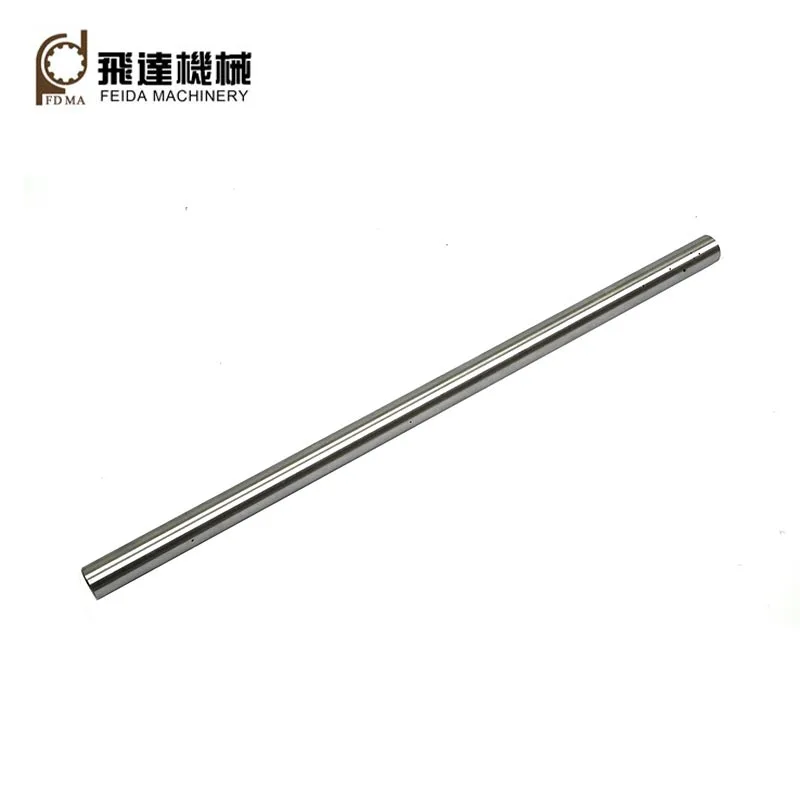
Linear Shaft
With over 30 years of customization experience,Feida Machinery factory can provide premium Linear shafts for our clients.Our products are according to ISO and DIN standard.We look forward to cooperating with you!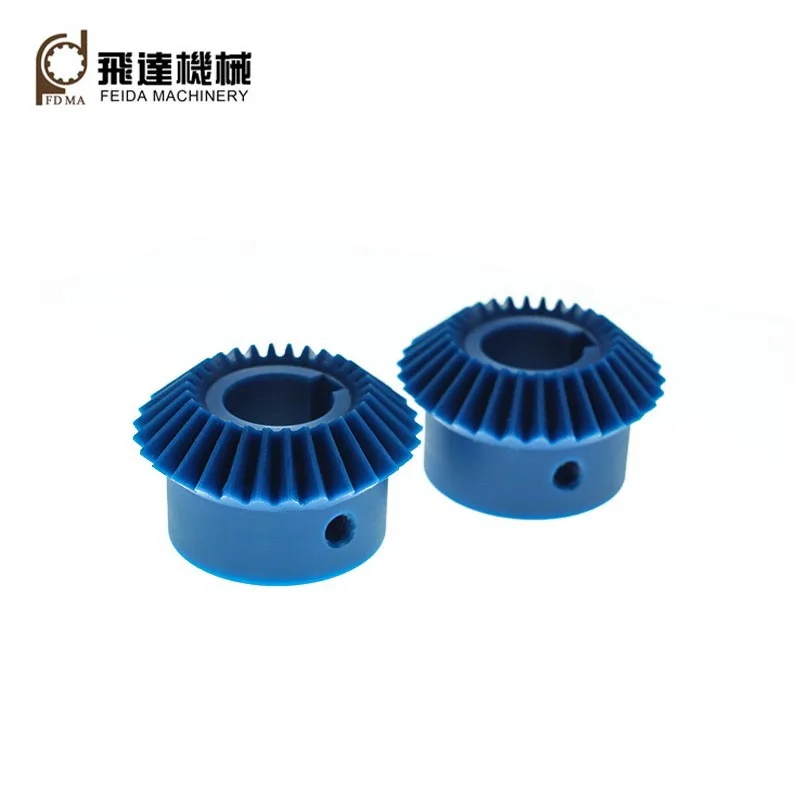
Plastic Straight Bevel Gears
Since 1988 ,Feida Machinery Factory adopts advanced manufacturing equipment to produce high precision plastic straight bevel gears with accuracy reaching ISO/DIN 7-10 level.Welcome new and old customers to continue to cooperate with us to create a better future!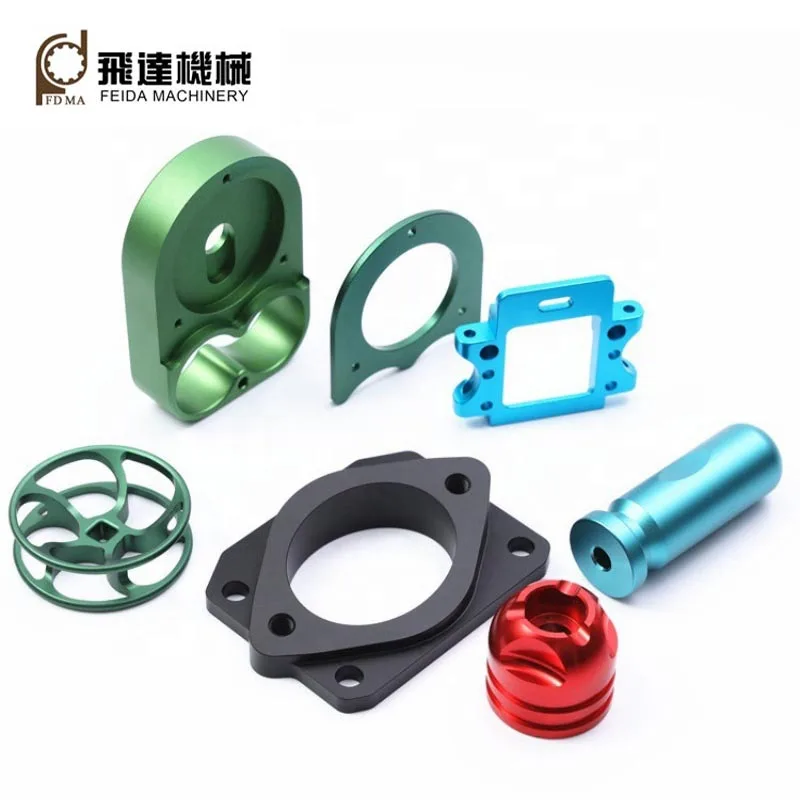
Aluminium Cnc Machining
With more than 30 years of technical accumulation, Feida Machinery always focus on the research and development, production and sales of Aluminium Cnc Machining spare parts, continuously introduce advanced equipment, constantly carry out self-technology revolution, keep up with the development of advanced technology, and provide excellent solutions for clients.Welcome new and old customers to continue to cooperate with us to create a better future!
Linear Shafts
With over 30 years of customization experience,Feida Machinery factory can provide premium Linear shafts for our clients.Our products are according to ISO and DIN standard.We look forward to cooperating with you!
Metal Straight Bevel Gears
With more than 30 years production experience,Feida Machinery produces high quality metal straight bevel gears in its own factory.Our clients are from home and abroad,some of whom also include global 500 enterprises.
We look forward to cooperating with you!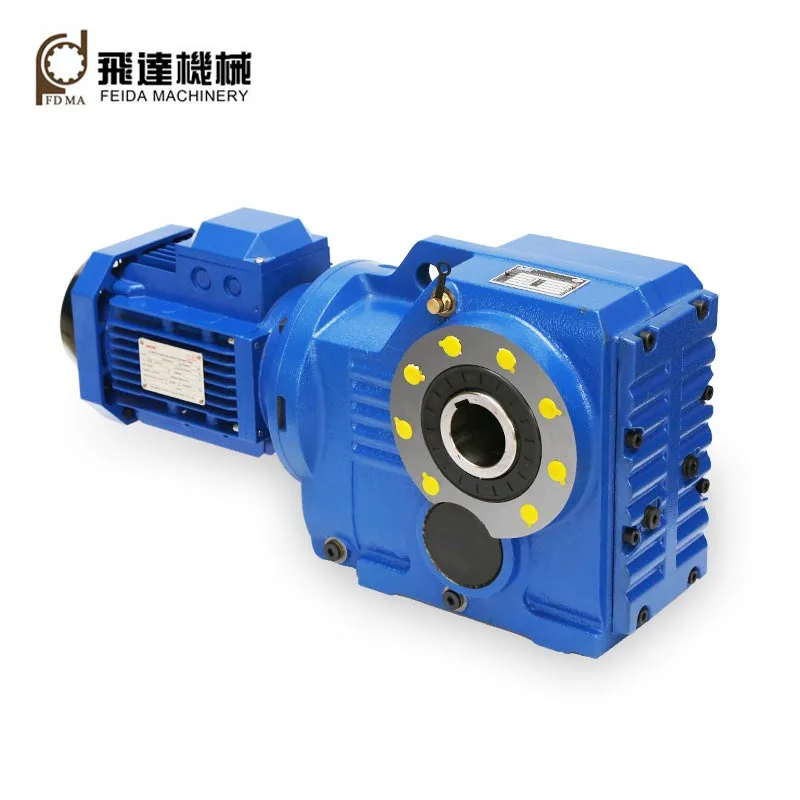
Helical gear reducers
Since it was founded in 1988,Feida Machinery has been specialized in manufacturing a wide range of high-quality helical gear reducers,OEM &ODM service is acceptable,Welcome to contact us!
- Related Blog
- Reviews
