English
- English
- беларускі
- Hrvatski
- Тоҷикӣ
- O'zbek
- Español
- Português
- русский
- Français
- 日本語
- Deutsch
- tiếng Việt
- Italiano
- Nederlands
- ภาษาไทย
- Polski
- 한국어
- Svenska
- magyar
- Malay
- বাংলা ভাষার
- Dansk
- Suomi
- हिन्दी
- Pilipino
- Türkçe
- Gaeilge
- العربية
- Indonesia
- Norsk
- تمل
- český
- ελληνικά
- український
- Javanese
- فارسی
- தமிழ்
- नेपाली
- български
- ລາວ
- Latine
- Қазақша
- Euskal
- Azərbaycan
- Slovenský jazyk
- Lietuvos
- Eesti Keel
- Română
- Slovenski
- Srpski језик

Products
China Machined Helical Metal Pinions Manufacturer, Supplier, Factory
Machined helical metal pinions are high-precision cylindrical gears with angled teeth that gradually engage mating components, reducing noise and distributing load across multiple teeth. Manufactured from forged or drawn alloy steel billets, these pinions undergo CNC turning, hobbing, and finish grinding to achieve tight tooth-to-tooth and cumulative pitch errors. They are engineered to work with Steel Helical Gear Components, Alloy Helical Transmission Gears, Metal Helical Pinion Sets, and Metallic Helical Gear Wheels in complete drive assemblies. Standard materials include case-hardened 8620, 20CrMnTi, 42CrMo, and 17CrNiMo6, with optional stainless steel for corrosive environments. Tooth surfaces are typically carburized to 58–62 HRC, then ground or honed to Ra 0.4–0.8 µm. Quality control follows AGMA 2015 and ISO 1328, using double-flank roll testing and CMM inspection to verify profile, lead, and runout. This production discipline ensures interchangeability with existing gear systems and long service life in high-torque applications.
Machined Helical Metal Pinions are available in both standard and custom configurations, with a complete range of dimensional and metallurgical options to match demanding power transmission tasks. The following list details the primary specifications that customers select when configuring a pinion for a new or existing gearbox.
- Tooth profile: involute, full-depth or stub teeth, with profile shift options.
- Module range: 0.5 mm to 8 mm as standard; up to 16 mm on request.
- Number of teeth: 8 to 120 standard; special tooth counts above 120 are produced through custom hobbing.
- Pressure angle: 20 degrees default; 14.5 and 25 degrees available for specialized load and backlash requirements.
- Helix angle: 10 to 30 degrees left-hand or right-hand; common angles include 15, 20, and 23 degrees.
- Face width: 8 mm to 160 mm standard, dependent on module and bending stress calculations.
- Hub configuration: plain bore, keyway, set screw, clamp, or spline bore from 4 mm to 120 mm.
- Material grades: 8620, 20CrMnTi, 42CrMo, 17CrNiMo6, 16MnCr5, stainless steel 17-4PH, and powdered metal.
- Heat treatment: carburizing, carbonitriding, induction hardening, nitriding, or through hardening.
- Core hardness: 30–45 HRC; surface hardness 55–62 HRC after case hardening.
- Accuracy class: AGMA 8–12, DIN 6–9, or ISO 6–9; ground options reach AGMA 13.
- Surface treatment: black oxide, phosphate, zinc plating, or electroless nickel for corrosion resistance.
| Specification | Standard Range | Custom Capability |
|---|---|---|
| Module | 0.5 – 8 mm | Up to 16 mm |
| Number of teeth | 8 – 120 | Above 120 |
| Pressure angle | 20 degrees | 14.5 / 25 degrees |
| Helix angle | 10 – 30 degrees | Up to 45 degrees |
| Face width | 8 – 160 mm | Up to 250 mm |
| Bore diameter | 4 – 120 mm | Custom |
| Surface hardness | 55 – 62 HRC | 50 – 64 HRC |
| Accuracy grade | AGMA 8 – 12 | AGMA 13+ |
| Max torque capacity | Up to 8,000 N m | Custom |
Beyond these standard parameters, each order of Machined Helical Metal Pinions can be customized with shaft pinions, integral hubs, anti-backlash features, or matched sets with specific center distance and backlash targets. Reverse engineering from sample parts or CAD files is supported, and all custom designs are validated through tooth contact analysis and finite element simulation before production. Each batch ships with dimensional inspection reports, material certificates, and heat treatment records. For high-volume programs, precision forging or powder metallurgy can be combined with finish machining to reduce unit cost while maintaining AGMA quality levels.
Related Products



Hot Products

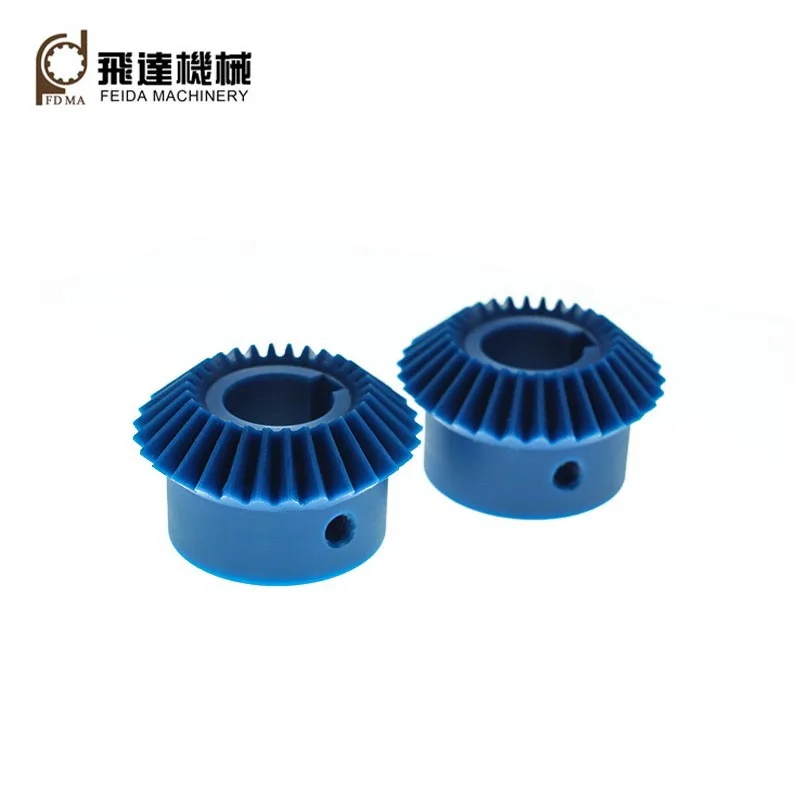
Plastic Helical Gears
High quality raw materials,professional production,and strict quality control allow Feida Machinery factory to supply high-class plastic helical gears to our clients at home and abroad.Whether you have detailed drawings or actual samples, we can work with you to bring your vision to life!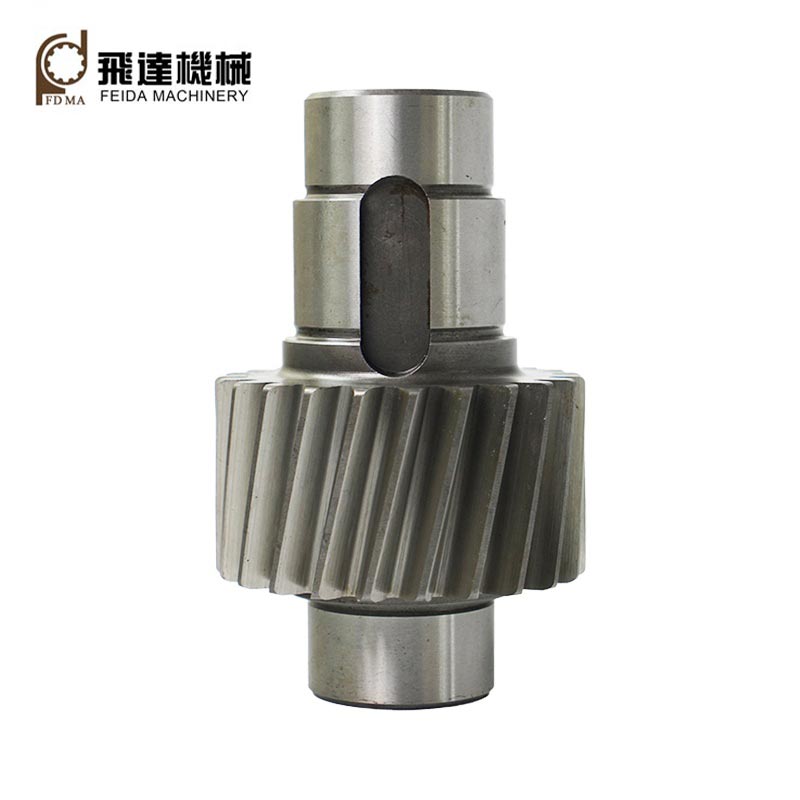
Helical Gear Shafts
Jinjiang Feida Machinery Co., Ltd. has been engaged in transmission parts manufacturing since 1988.The transmission parts include helical gear shafts,gears,spline shafts,etc.OEM & ODM services are acceptable.Welcome to contact us. Hope to build business relationship with you!
Metal Straight Bevel Gears
With more than 30 years production experience,Feida Machinery produces high quality metal straight bevel gears in its own factory.Our clients are from home and abroad,some of whom also include global 500 enterprises.
We look forward to cooperating with you!
Spur Gear Shafts
High quality and good price spur gear shafts are offered by Feida Machinery factory.We have more than 30 years’ experience in the industry ,high quality raw materials, high production standards, and a highly specialized team.Hope to build business relationship with you!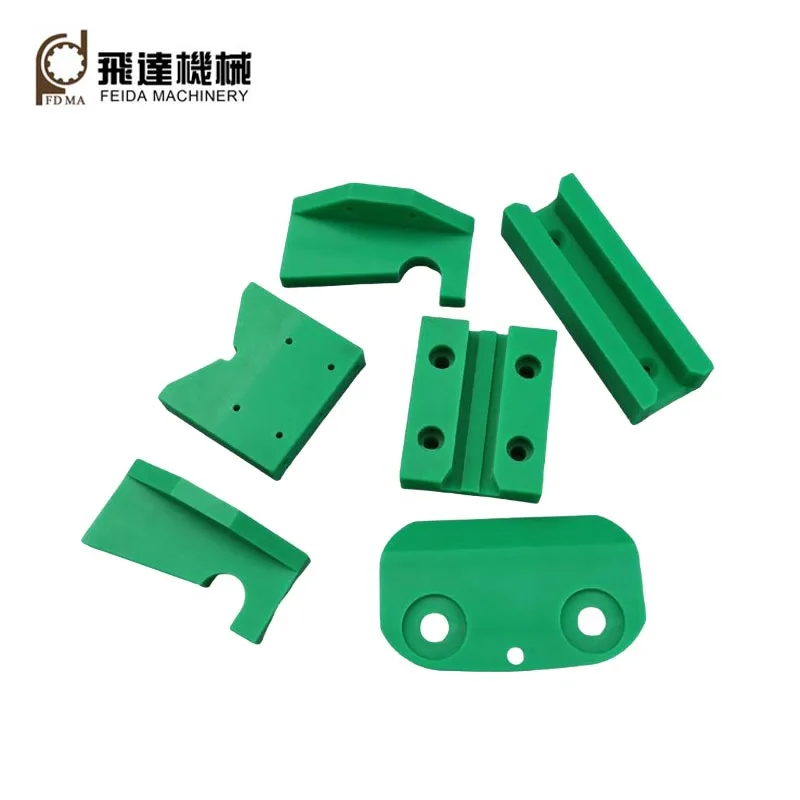
Cnc Plastic Machining
As a china professional manufacturer, exporter,Feida would like to provide you high quality Cnc Plastic Machining parts. OEM and ODM services are acceptable.We welcome to contact us for coopration!
Metal Worm Gears
Feida Machinery factory adheres to the "quality first, service first, continuous improvement and innovation to meet customers" for the business purpose.Our metal worm gears are satisfied by our new and old customers.Weclome to contact us!
- Related Blog
- Reviews
